
Date: March 4, 2026
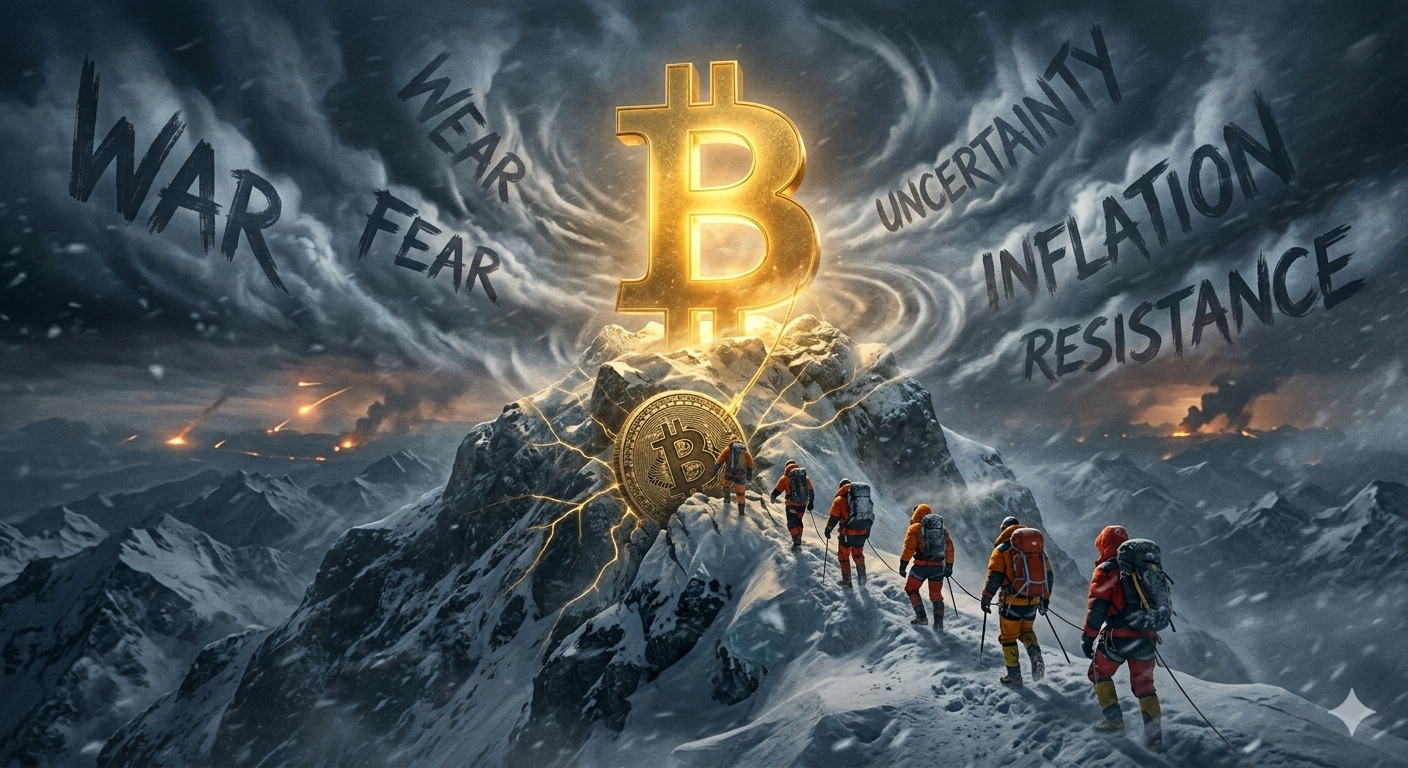
The crypto market remains caught in a tug-of-war between geopolitical uncertainty and steady infrastructure development. Bitcoin continues to trade within a well-defined range, showing remarkable resilience despite ongoing Iran conflict concerns, while developments in regulation, governance, and global blockchain adoption signal continued maturation of the ecosystem .
Market Overview: Bitcoin Holds Range Amid Geopolitical Uncertainty
Bitcoin experienced another volatile session, briefly pushing above $70,000 before reversing course and sliding approximately 2.3% to trade in the high-$60,000s . The price action reflects the market’s continued sensitivity to headlines surrounding the Israel-Iran conflict, with investors rotating into traditional safe havens like gold while selling crypto assets .
- Bitcoin (BTC): Trading near $68,100 after touching lows of $67,834 during early European trading
- Ethereum (ETH): Trading lower alongside Bitcoin, confirming broad risk-off sentiment
- Altcoins: Solana and other large-cap assets traded in sympathy with Bitcoin
The selling pressure stems from renewed fears around the Israel-Iran conflict, including concerns about potential closure of the Strait of Hormuz and its impact on oil prices and inflation . Higher oil prices could keep interest rates elevated for longer, further pressuring speculative assets .
Liquidations: Over the past 24 hours, total liquidations reached approximately $367 million, with longs accounting for $235 million and shorts representing $132 million .
Sentiment Update: Extreme Fear Persists
The Crypto Fear & Greed Index has fallen to 10, down from 14 yesterday and firmly in “Extreme Fear” territory . The index has now remained in Extreme Fear for nearly a month, reflecting sustained anxiety among market participants driven by geopolitical tensions and macroeconomic uncertainty .
Bitwise CIO: “This Weekend Permanently Changed Finance”
In a widely circulated memo, Bitwise Chief Investment Officer Matt Hougan declared that the February 28-March 2 weekend—when US and Israeli forces launched strikes on Iran—marked a turning point for crypto markets .
Key observations from Hougan :
- With traditional markets closed, crypto markets became the primary venue for global price discovery during the geopolitical shock
- Significant activity surged on platforms like Hyperliquid, particularly in perpetual contracts tied to both crypto assets and real-world commodities like oil
- Tether’s gold token (XAUT) saw trading volume exceed $300 million in 24 hours
- Prediction markets including Kalshi and Polymarket reached new volume highs
- Hougan admitted he previously expected a 5-10 year gradual evolution, but now believes “this will happen faster than I anticipated”
His conclusion: hedge funds, banks, and competitive traders now have “no choice” but to engage with on-chain finance .
Expert Views: Divergent Outlooks on Bitcoin’s Trajectory
Market experts remain divided on whether the Iran conflict will ultimately benefit or hinder Bitcoin’s recovery .
- Arthur Hayes (Maelstrom CIO) argues conflict will force the Fed to provide liquidity support for US war efforts, historically preceding monetary easing and risk asset rallies
- London Crypto Club analysts suggest either outcome benefits Bitcoin: prolonged war drives safe-haven demand, while quick resolution releases buying pressure
- Jake Ostrovskis (Wintermute OTC) warns that sustained oil prices above $80 could reinforce “re-inflation” narratives, delaying Fed rate cuts
- James Butterfill (CoinShares Research) cautions that energy-driven inflation may delay monetary easing while also undermining confidence in global financial structures—potentially benefiting Bitcoin as a non-sovereign asset in the medium term
- Pratik Kala (Apollo Crypto Research) highlights technical risks: sustained trading in the $65k-$70k range could trigger profit-taking if broken
- Support: $60,000 remains the key “line in the sand”; a sustained break could open a move toward the mid-$50,000s
- Resistance: $70,000 (February highs), followed by $75,000 and $80,000
Regulatory Developments: CFTC Clears Path for US Perpetual Contracts
In a major development for US crypto derivatives, CFTC Chairman Mike Selig announced that the agency is working to allow “genuine professional perpetual contracts” to operate within the United States, with an announcement expected within the next month .
- The move aims to bring liquidity and activity back onshore that has previously flowed overseas
- CFTC and SEC are collaborating through “Project Crypto” to advance multiple digital asset policies
- Initiatives include clearer guidance for DeFi developers and standards for prediction markets
- SEC Chairman Paul Atkins noted that while regulators pursue innovation waivers, congressional legislation remains necessary for legal certainty
Trump: Banking Industry Threatening Crypto Legislation
President Trump took to Truth Social to express frustration that the banking industry is attempting to block the GENIUS stablecoin bill and the CLEAR Act .
- Warned that without action, the crypto industry could “move to China and other countries”
- Urged banks to “reach an agreement with the crypto industry,” emphasizing it serves Americans’ best interests
- Called for completing market structure reform so “Americans can earn more from their money”
Congressman French Hill separately urged the Senate to advance crypto market structure legislation, with stablecoin yield disputes emerging as a key point of contention .
Bank of Japan: Blockchain Settlement Trials for Reserves
Bank of Japan Governor Kazuo Ueda announced that the central bank will conduct experiments using blockchain technology to settle deposits that financial institutions hold at the BOJ .
- Part of an ongoing “sandbox project” exploring central bank money usage on blockchain
- Will examine connection methods with existing systems and use cases including domestic interbank settlement and securities settlement
- Blockchain could enable 24/7 instant settlement and reduce gridlock risk during stress events
- Ueda emphasized that central bank money serves as the “anchor of trust” connecting all payment instruments
- The BOJ has been experimenting with CBDC since 2021 and joined international trials for tokenized central bank money to streamline cross-border payments
No decision has been made on issuing a retail CBDC, with some analysts questioning necessity given Japan’s well-developed digital payment systems and continued cash usage .
Romania: Blockchain-Based Fiscal Receipt System
Romania’s Ministry of Finance launched BF-CHAIN, an innovative project using blockchain to create tamper-proof records of fiscal receipts .
- Creates an immutable digital ledger where fiscal receipts are automatically recorded
- Eliminates fraud risks, human errors, and data loss
- Citizens can access transaction history instantly through a mobile app
- Project runs December 2025-December 2027, integrating at least 5,000 cash registers initially, with nationwide expansion planned
- Existing cash registers don’t need replacement—blockchain system operates after receipt transmission
The architecture could extend to electronic invoices, potentially supporting real-time VAT collection and automated tax deductions through smart contracts, aligning Romania with international real-time reporting standards .
Uniswap Governance Vote Concludes Today
The Uniswap governance vote on Proposals 94 and 95 is scheduled to conclude today, March 4 .
- Proposals would redirect fees from eight Layer-2 networks to UNI token holders
- Community projections estimate approximately $27 million in annualized revenue if implemented
- Vote has drawn strong support from token holders viewing fee capture as essential for sustainable protocol income
The outcome could significantly impact Uniswap’s competitive position in the growing Layer-2 trading market .
Bitcoin Nears 20 Million Milestone
Bitcoin is just days away from the 20 millionth BTC being mined, according to CoinDesk . With 21 million total supply, over 95% of all Bitcoin that will ever exist is already in circulation. The remaining 1 million BTC is expected to take approximately 114 years to mine, highlighting Bitcoin’s unique emission schedule and eventual terminal scarcity.
Quick Hits: Other Notable Developments
- YZiLabs pledged $100 million investment in HashGlobal’s BNB holding fund
- Michael Saylor tweeted that he is “buying bitcoin”
- Vitalik Buterin stated Ethereum should build “sanctuary-type technology”
- MARA revised its 2026 asset management strategy, allowing sale of bitcoin held on its balance sheet
- Antalpha disclosed purchase of $134 million in TetherGold (XAUT)
- US government transferred 0.0378 BTC; related addresses hold approximately 320,000 BTC
- Ray Dalio (Bridgewater founder) stated Bitcoin is not suitable as long-term store of value
- Tether and Lugano committed up to $6.3 million to expand Bitcoin adoption in the Swiss city
- Bitcoin community controversy continues over BIP-110 proposal limiting on-chain non-financial data (inscriptions, OP_RETURN)
What to Watch
- Uniswap governance vote concludes
- Bitcoin Ski Summit begins (March 4-8), gathering institutional investors, miners, and developers
- Sui network scheduled token unlock (~1.13% of supply)
- Potential CFTC announcement on perpetual contracts
- Iran conflict developments and impact on oil prices
- Fed rate expectations (CME data shows 2.4% probability for March cut, 41% for June)
Final Thoughts
March 4, 2026, captures the complex reality of today’s crypto markets: short-term price action remains hostage to geopolitical headlines and macro uncertainty, while long-term infrastructure development accelerates across multiple fronts .
The Bitwise CIO’s observation that crypto became the primary price discovery venue during a weekend geopolitical shock represents a genuine milestone—even if that price discovery was to the downside . Meanwhile, central banks in Japan and governments in Romania are actively integrating blockchain into core financial infrastructure . The CFTC is moving to bring offshore derivatives onshore . And President Trump is publicly fighting for crypto legislation against banking industry opposition .
Bitcoin’s resilience in holding the $60,000-$70,000 range despite significant selling pressure suggests structural demand remains . But as Wintermute noted, sustained recovery requires genuine institutional demand, not just short covering .
The foundation for the next growth phase continues taking shape—even as traders watch headlines from the Middle East and wait for the next catalyst.
Disclaimer: The above content is for informational purposes only and does not constitute financial advice. Investing in cryptocurrencies involves significant risk. Please conduct your own research before making any investment decisions.
 By
By



 By
By