
Date: March 2, 2026
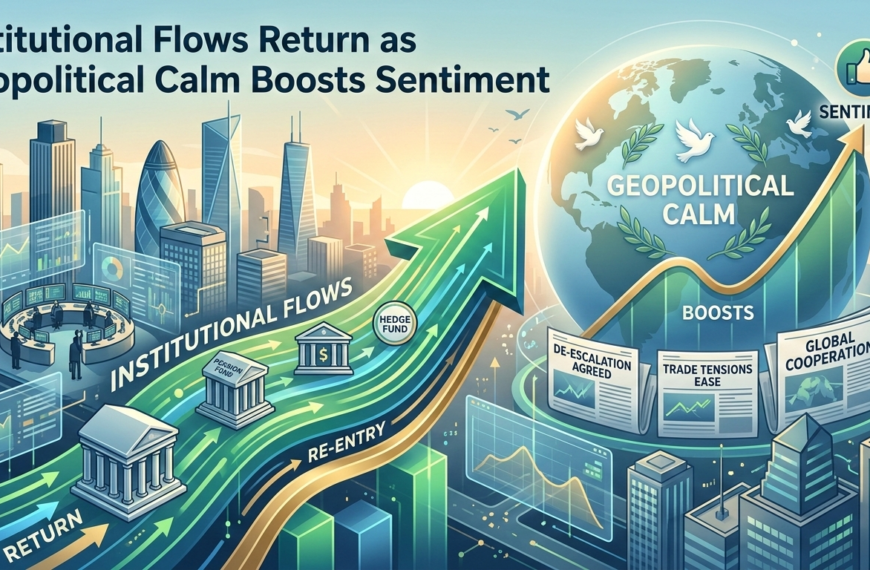
The crypto market entered March with a volatility spike as escalating geopolitical tensions collided with a wave of institutional adoption announcements. Over the weekend, coordinated military strikes by the United States and Israel against Iran sent shockwaves through global markets, with Bitcoin briefly plunging below $64,000 before staging a recovery . Meanwhile, traditional finance giants continued laying the groundwork for deeper crypto integration, creating a complex landscape where short-term fear meets long-term structural growth.
Geopolitical Shock: Bitcoin’s Real-Time Reaction
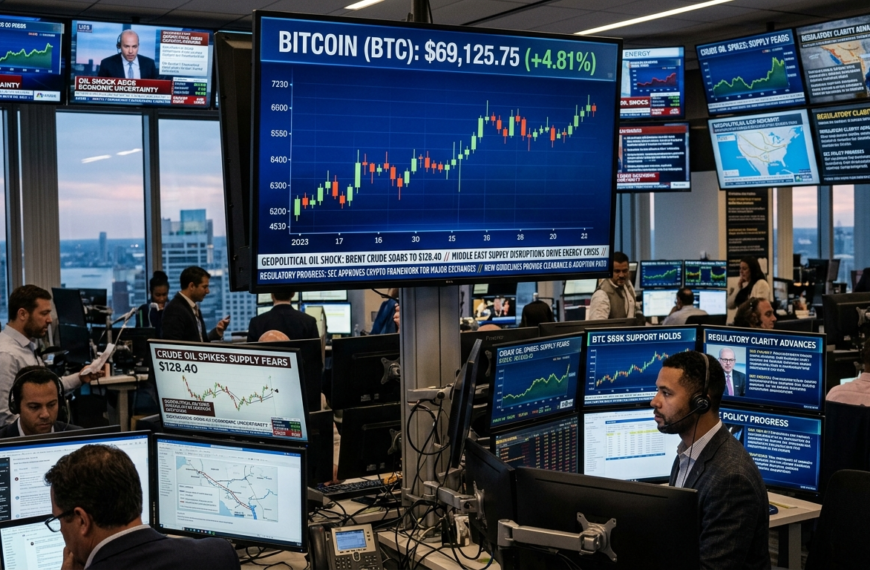
The weekend’s dramatic developments began on February 28, when US and Israeli forces launched military operations inside Iran, resulting in the death of Iran’s Supreme Leader Ali Khamenei . Because cryptocurrency markets trade 24/7, Bitcoin became the world’s real-time barometer of fear, plunging from $65,572 to $63,176 in approximately one hour.
The liquidation cascade was brutal: over $100 million worth of leveraged Bitcoin longs were wiped out in just 15 minutes following the news, with approximately $128 billion erased from the total crypto market cap in a single hour.
However, Bitcoin demonstrated remarkable resilience. As traders assessed the implications—including potential de-escalation from Tehran’s leadership vacuum—the largest cryptocurrency rebounded sharply, climbing above $68,000 during early Asian trading . At the time of writing, Bitcoin trades near $66,300, down about 2.2% on the day but well off its weekend lows.
Ethereum followed a similar pattern, dropping below $2,000 before recovering to approximately $1,950, down nearly 4% over 24 hours.
Safe-Haven Flows: Tokenized Gold Shines
With traditional gold markets closed over the weekend, tokenized gold assets assumed primary price discovery during the geopolitical shock . Both XAUT and PAXG briefly surged above $5,400 as investors sought traditional safe havens accessible through crypto rails . Physical gold also rallied, briefly touching $5,300 before retracing.
This dynamic highlights an emerging narrative: while cryptocurrencies themselves face selling pressure during risk-off events, blockchain-based representations of traditional safe havens are gaining traction as efficient exposure vehicles.
Market Sentiment: Extreme Fear Persists
Despite the rebound from weekend lows, sentiment indicators remain deeply pessimistic. The Crypto Fear & Greed Index currently sits at 10, down from 14 the previous day and firmly in “Extreme Fear” territory . Trading volumes have cooled slightly, but short-term risk appetite has yet to recover.
Today’s notable unlock: ENA releases approximately 0.53% of circulating supply, valued at roughly $4.3 million.
Institutional Adoption: Banking Giants Accelerate Plans
Beneath the surface-level price volatility, traditional finance’s march into crypto continues unabated. A wave of announcements over the past 48 hours confirms that institutional interest remains robust despite market turbulence.
Morgan Stanley has applied for a US trust bank license to establish “Morgan Stanley Digital Trust,” which would allow the investment giant to provide native custody, staking, and lending for assets including Bitcoin and Solana . This represents a significant shift from simply distributing ETFs to owning the underlying infrastructure, potentially lowering barriers for pension funds and insurance companies.
Citi confirmed plans to launch institutional-grade Bitcoin custody services in 2026. With approximately $30 trillion in assets under custody, Citi’s entry could reshape the competitive landscape by integrating traditional tax reporting, compliance auditing, and API connectivity directly into crypto asset management.
Barclays is exploring a blockchain-based payments platform that may incorporate stablecoins and tokenized deposits, aiming to bypass the slow, high-cost clearing processes of the traditional SWIFT system.
SoFi, the US crypto-chartered bank with over 13.7 million users, now supports Solana network deposits—a landmark moment for public chain integration into regulated banking.
Stablecoin Innovation: PayPal and SBI Make Moves
MoonPay unveiled PYUSDx, a stablecoin issuance framework backed by PayPal’s PYUSD. Through MoonPay’s partnership with M0, developers can now launch brand-specific stablecoins without rebuilding compliance or payment rails . This “plug-and-play” model could dramatically shorten launch cycles for AI infrastructure, gaming, or e-commerce applications.
SBI Holdings announced the launch of JPYSC, a yen-backed stablecoin developed in collaboration with Startale. As a “Type III Electronic Payment Instrument” under Japan’s amended Payment Services Act, JPYSC combines blockchain efficiency with high regulatory compliance, positioning it as a vital bridge for B2B settlements in the strictly regulated Japanese market.
Protocol Governance: Uniswap and AAVE Proposals Advance
Two major governance proposals are reshaping DeFi economics:
Uniswap initiated a multi-chain fee-sharing governance vote. The proposal would redirect at least one-sixth of transaction fees from certain networks—currently allocated to liquidity providers—into a “token jar,” to be distributed to UNI holders who burn an equivalent amount of UNI.
AAVE’s “Aave Will Win” Temp Check proposal has passed, aiming to transition Aave Labs toward a fully token-centric model by allocating 100% of product revenue directly to AAVE token holders.
Ethereum’s Scalability Roadmap
Vitalik Buterin outlined Ethereum’s two-phase scalability roadmap, confirming that the network’s evolution will proceed in short-term and long-term phases.
In the short term, the “Glamsterdam” hard fork introduces multidimensional gas, allowing Ethereum to price resources like storage and computation independently to prevent state bloat.
Long-term, the roadmap shifts toward zkEVM integration and Data Availability Sampling (Peer DAS), aiming to boost mainnet throughput by 1,000x. This confirms Ethereum’s evolution from a simple smart contract platform into a global settlement layer.
Regulatory Developments: Global Frameworks Take Shape
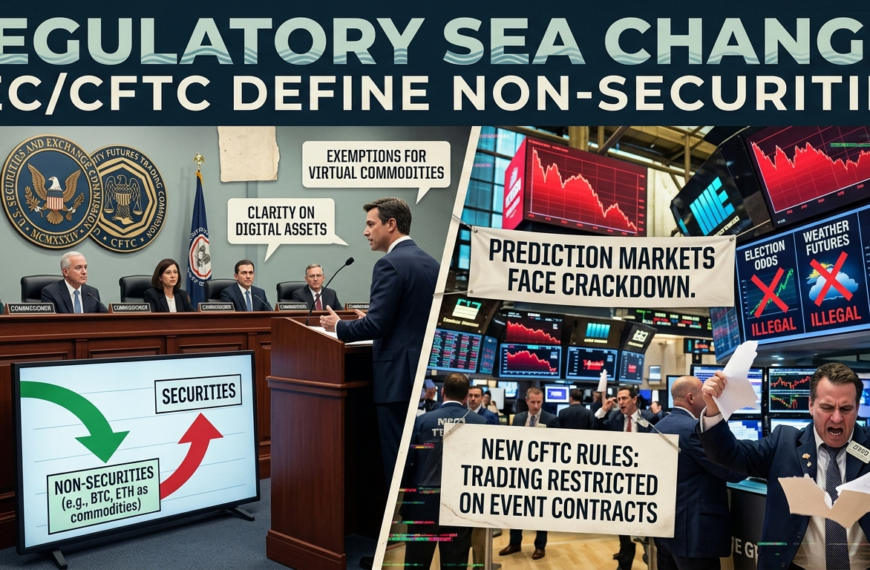
United States: SEC Chair Gary Gensler stated that the US had previously “missed significant opportunities” in crypto and is now working to catch up . Meanwhile, President Trump’s nominee to succeed Jerome Powell as Federal Reserve Chair, Kevin Warsh, has raised concerns among crypto holders due to his history as a critic of quantitative easing.
United Kingdom: Regulators are considering allowing cryptocurrencies for gambling payments, while the FCA selected four companies—Monee Financial Technologies, ReStabilise, Revolut, and VVTX—for its stablecoin regulatory sandbox.
Hong Kong: Financial Secretary Paul Chan revealed the government will submit digital asset policy legislation this year, with the first batch of stablecoin licenses expected in March . Hong Kong is also building a digital bond platform to serve as a regional tokenization hub.
Minnesota: Proposed legislation would ban crypto ATMs to combat scams targeting the elderly.
X Platform’s Content Policy Shift
X (formerly Twitter) introduced a “Paid Partnership” label to enhance content transparency . Notably, promotions related to crypto and investment services may not qualify under the updated policy, potentially reducing space for deceptive “stealth marketing” that often misleads retail investors . This move responds to global regulators demanding transparency in influencer marketing.
Venture Capital Trends: Capital Concentration
February 2026 saw crypto startups raise $883 million, but the number of venture capital transactions hit a 5.5-year low . Funding is concentrating in specific sectors: stablecoin infrastructure, custody solutions, and compliance tools.
Notably, 85% of tokens launched in 2025 currently trade below their opening prices, signaling that the VC narrative has shifted toward “revenue-first” fundamentals rather than speculative growth.
Real-World Asset Tokenization
WisdomTree received SEC approval for a tokenized money market fund enabling 24/7 trading.
France’s BNP Paribas launched a tokenization pilot, introducing French money market fund shares on-chain.
Hong Kong’s SFC approved two RWA tokenization products from DL Holdings, marking the region’s first real estate RWA cases.
Global Blockchain Events
March 2026 is packed with major industry gatherings:
- Crypto Expo Europe (March 1-2, Bucharest): Focuses on trading ecosystems and DeFi protocols
- Financial Cryptography & Data Security (FC’26) (March 2-6, St. Kitts & Nevis): Academic conference exploring zero-knowledge proofs and privacy systems
- DC Blockchain Summit (March 17-18, Washington): Policy-focused discussions with lawmakers
- Crypto Summit Russia (March 25-26, Moscow): Mining economics and energy strategy
- EthCC (March 30-April 2, Cannes): Ethereum-focused developer conference
- AI x CRYPTO EXPO (Silicon Valley): Explores automation and intelligent smart contracts
These gatherings will influence regulatory clarity, institutional adoption, and technological development throughout 2026.
What to Watch This Week
Macroeconomic: US jobless claims data and Fed Governor Musalem’s speech on the central bank’s role . CME data shows 98% probability the Fed maintains rates in March, with June’s first cut probability at 39.5%.
Geopolitical: President Trump stated operations against Iran may last up to four weeks until objectives are achieved . Markets will watch for potential closure of the Strait of Hormuz and further Iranian retaliation.
ETF Flows: When US equity markets reopen Monday, all eyes will be on whether Bitcoin ETFs experience significant outflows following the weekend’s geopolitical developments.
Final Thoughts
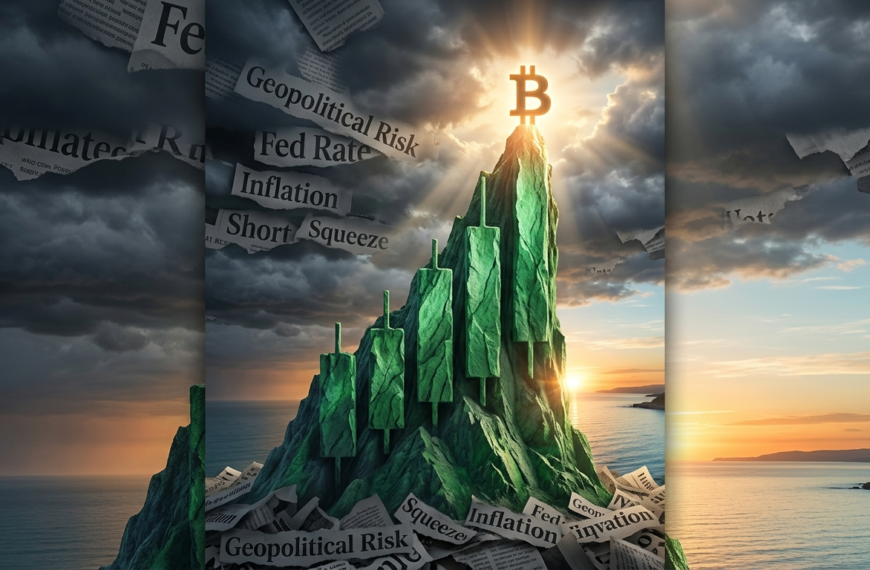
March 2, 2026, captures the dual nature of today’s crypto market: short-term volatility driven by geopolitical fear, alongside long-term structural buildup as traditional finance integrates digital assets.
Bitcoin’s ability to recover from weekend lows—despite $128 billion in liquidations—demonstrates resilience, but sustained upside requires genuine institutional demand returning, not just short covering . The Coinbase premium index remains negative, and ETF flows haven’t reversed, suggesting caution remains warranted.
Yet beneath the price action, the infrastructure keeps building: Morgan Stanley applying for trust charters, Citi preparing custody services, Barclays exploring blockchain payments, and Ethereum planning quantum-resistant upgrades . The foundation for the next growth phase continues taking shape, even as geopolitical winds create turbulence.
Disclaimer: The above content is for informational purposes only and does not constitute financial advice. Investing in cryptocurrencies involves significant risk. Please conduct your own research before making any investment decisions.
 By
By


 By
By