
CRYPTO MARKET PULSE
Quantum Security, Institutional Flows, and Corporate Restructuring Define the Week
Market Analysis & Industry Briefing — Friday, July 10, 2026

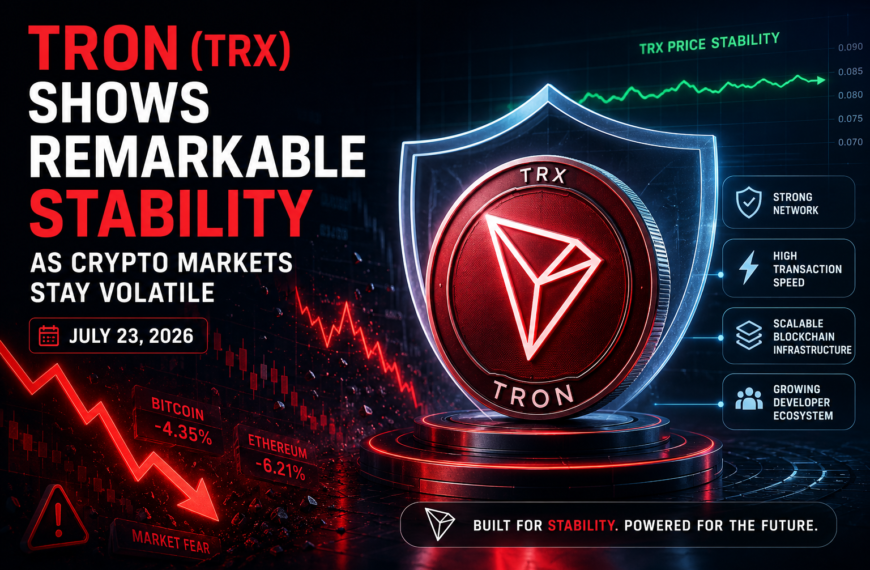
Cover illustration: quantum security, market flows, and regulation converging across the crypto industry.
Executive Snapshot
Bitcoin enters the second week of July 2026 in a fragile but stabilizing posture. After a brutal June in which the asset fell from a monthly open above $73,600 to touch a 21-month low beneath $58,000, both price action and institutional flow data have shown early, tentative signs of repair. At the same time, the industry’s longer-horizon story is shifting toward existential infrastructure questions — chiefly, how blockchains will defend themselves against a future cryptographically relevant quantum computer — while a Trump-family-linked payments venture, World Liberty Financial’s affiliated AI Financial Corporation, negotiates a distressed sale of its only revenue-generating business. Regulatory conversations continue in parallel across major jurisdictions, and corporate consolidation among blockchain infrastructure firms has not slowed despite the broader market malaise. The table below summarizes the key figures referenced throughout this briefing.
| Indicator | Latest Reading | Context |
| BTC-USD spot price | ≈ $63,250 – $63,500 | Up roughly 1.5% intraday; still well below the October 2025 cycle high |
| June 2026 monthly performance | Open ≈ $73,674 → sub-$58,000 low | Worst month for BTC since the current cycle began; ~18% monthly drawdown at the low |
| US spot Bitcoin ETF flows (YTD) | ≈ –$5.4B net outflows | June alone accounted for a record ≈ $4.5B in monthly redemptions |
| 10-day ETF outflow streak (late June) | ≈ –$2.7B to –$2.8B drained | Ended July 2–3 with a single-day inflow of ≈ $221.7M, led by Fidelity’s FBTC |
| 3-day inflow rebound (Jul 2–7) | ≈ $510M combined | BlackRock’s IBIT rejoined buyers on July 6 with ≈ $209M, its first positive day in weeks |
| Crypto Fear & Greed Index | ≈ 23–30 (‘Fear’) | Improved slightly from extreme fear but not yet neutral |
| AI Financial Corp. (AIFC) / WLFI | Talks to sell payments unit for up to $15M | Comes after WLFI token fell ~70% and AIFC shares fell over 90% from highs |
Table 1. Key market and industry figures referenced in this briefing, compiled from multiple financial media and data providers as of July 9–10, 2026.
Taken together, the data point to a market that is neither in freefall nor firmly in recovery. Sentiment remains cautious, positioning is being rebuilt gradually, and the industry’s structural priorities — quantum defense, regulatory clarity, and balance-sheet discipline among crypto-linked firms — are increasingly separate from short-term price swings. The sections that follow examine each theme in turn.
1. Quantum-Resistant Security Becomes a Top Industry Priority

Illustration: a blockchain vault protected by a lattice-pattern quantum shield.
Perhaps the most consequential long-term story in the crypto industry this week has nothing to do with price. Major blockchain developers are accelerating plans to defend their networks against a future cryptographically relevant quantum computer (CRQC) — a machine capable of running Shor’s algorithm at scale and deriving a private key from an exposed public key. Because Bitcoin, Ethereum, and most other major chains still rely on elliptic-curve signature schemes (ECDSA or similar), researchers regard this as a genuine, if not immediate, structural vulnerability rather than speculative alarmism.
The Ethereum Foundation has elevated the issue to a top strategic priority, standing up a dedicated post-quantum research team. Its 2026 roadmap includes work on hash-based signatures for validators, exploration of native account abstraction, and a broader push to migrate wallet and validator security away from elliptic-curve cryptography over the coming years. Bitcoin’s community, meanwhile, is debating an early-stage proposal — commonly referred to as BIP 360 — for quantum-resistant address formats, though no binding protocol change has been adopted. Independent research published earlier in 2026 estimated that a sufficiently advanced quantum machine could, in a worst case, derive a Bitcoin private key within a window comparable to the network’s roughly ten-minute block time, a finding that has sharpened urgency around the debate even though such hardware does not yet exist.
Two families of post-quantum signature schemes have emerged as front-runners across the industry: lattice-based constructions such as CRYSTALS-Dilithium and Falcon, and hash-based schemes such as SPHINCS+ and XMSS. All three were finalized by the US National Institute of Standards and Technology (NIST) in its 2024 post-quantum cryptography standardization process and are now treated as the baseline reference set for blockchain engineering teams. A parallel and complementary defense is emerging through zero-knowledge proof systems: STARK-based proofs, used by networks such as Starknet and by a growing number of Bitcoin layer-2 and Zcash-adjacent projects, rely purely on hash-function security rather than integer factorization or elliptic-curve math, making them naturally quantum-resistant.
| Network / Project | Approach | Status (as of mid-2026) |
| Ethereum | Hash-based validator signatures; native account abstraction research | Dedicated post-quantum team; early-stage roadmap, no binding upgrade yet |
| Bitcoin | Proposed quantum-resistant address format (BIP 360, under discussion) | Community debate stage; no consensus protocol change adopted |
| Quantum Resistant Ledger (QRL) | XMSS hash-based signatures from genesis | Live mainnet built quantum-resistant from inception |
| Algorand | Falcon-1024 lattice-based signatures | Live on mainnet since November 2025 |
| Hedera / QANplatform | CRYSTALS-Dilithium | Active integration and research |
| Starknet / STARK rollups | Hash-based zero-knowledge proofs (STARKs) | In production for scaling; inherently quantum-resistant by design |
Table 2. Selected post-quantum cryptography approaches across major blockchain networks, based on NIST-aligned algorithm families and 2026 project roadmaps.
The engineering challenge is not trivial. A traditional Bitcoin ECDSA signature is roughly 70 bytes; post-quantum signatures can balloon to several kilobytes, threatening to bloat block sizes and reduce throughput unless offset by aggregation techniques or off-chain proof systems. For Bitcoin in particular, migration is arguably more a governance problem than a cryptographic one: any change to signature schemes touches consensus rules, wallet software, custodial infrastructure, and the security of billions of dollars held in older address formats, some of which have already exposed their public keys through prior transactions. Industry experts caution that the assets most immediately at risk are not freshly generated wallets but older, reused, or dormant addresses whose public keys are already visible on-chain — meaning the migration timeline is not simply a matter of choosing an algorithm, but of coordinating a network-wide transition before any adversary gains the computational power to exploit it. Analysts broadly agree that implementation across the largest networks will take years, but the direction of travel — from research paper to funded roadmap to early proposals — has clearly accelerated in 2026.
2. Trump-Linked Crypto Venture Explores Sale of Its Payments Business

Illustration: a corporate tower under strain sheds value while a bridge of transactions links it to a buyer.
A second major storyline this week concerns AI Financial Corporation (AIFC), formerly known as Alt5 Sigma, a Nasdaq-listed company with deep capital ties to World Liberty Financial (WLFI), the decentralized finance venture promoted by members of the Trump family. According to reporting from the Wall Street Journal and multiple financial outlets, AI Financial has signed a non-binding term sheet to sell its core, revenue-generating payments subsidiary, Alt5 Sigma Canada Inc., to Perpetuals.com Ltd, a Tokyo-based, Nasdaq-listed blockchain company, in a deal that could reach up to $15 million.
The proposed structure reportedly includes $5 million paid upfront in Perpetuals.com stock, with an additional $10 million contingent on the unit hitting future revenue targets, alongside the assumption or settlement of certain AI Financial liabilities. The payments subsidiary generated approximately $25 million in revenue last year and represents AI Financial’s only meaningful operating business; a completed sale would leave the company almost entirely dependent on its depreciated holdings of WLFI tokens.
| Deal Parameter | Reported Detail |
| Seller | AI Financial Corporation (AIFC), formerly Alt5 Sigma |
| Asset being sold | Alt5 Sigma Canada Inc. (payments / transaction-processing unit) |
| Buyer | Perpetuals.com Ltd (PDC), Tokyo-based, Nasdaq-listed |
| Deal size | Up to $15 million (≈ $5M upfront in stock + ≈ $10M performance-linked) |
| Unit’s 2025 revenue | ≈ $25 million (AI Financial’s sole revenue source) |
| Deal stage | Non-binding term sheet; subject to due diligence, pricing, board and regulatory approval |
Table 3. Reported terms of the AI Financial–Perpetuals.com payments-unit sale negotiation, as disclosed in corporate filings and press statements dated July 7–8, 2026.
The backdrop to the sale talks is a sharp reversal of fortune. World Liberty Financial acquired a controlling stake in the company (then Alt5 Sigma) in August 2025 by paying with its own WLFI tokens; AI Financial subsequently raised roughly $750 million from outside investors specifically to purchase additional WLFI. Since then, the WLFI token has fallen approximately 70% in value, and AI Financial’s own share price has dropped more than 90% from its highs, reducing its market capitalization to roughly $80 million. Under World Liberty’s token-sale arrangement, Trump-affiliated entities are entitled to 75% of proceeds from WLFI sales, an arrangement that reportedly generated an estimated $540 million in cash for those entities even as later AI Financial investors absorbed steep losses. The company has separately disclosed a large net loss for fiscal 2025 and warned of substantial doubt regarding its ability to continue as a going concern over the next twelve months.
For Perpetuals.com, acquiring a standalone payments-processing business may be more attractive divorced from a politically sensitive crypto-treasury structure than as part of AI Financial’s broader balance sheet. The company’s chief strategy officer has publicly stressed that due diligence is ongoing and that no final decision has been made, and reporting indicates the talks also include a separate arrangement in which Perpetuals.com would explore offering WLFI’s USD1 stablecoin in Europe and license its trading technology to AI Financial. The episode illustrates a broader dynamic playing out across politically branded crypto ventures in 2026: high-profile sponsorship and rapid early fundraising do not guarantee operating sustainability once token valuations compress, and outside investors — rather than the venture’s founders — have tended to absorb the resulting losses.
3. Institutional Sentiment: Bitcoin ETF Outflow Streak Ends

Illustration: capital flow reversing direction across the Bitcoin ETF complex.
US spot Bitcoin ETFs spent much of June and early July in a punishing stretch of redemptions. A ten-consecutive-session outflow streak drained an estimated $2.7 billion to $2.8 billion from the funds, contributing to a record monthly outflow of roughly $4.5 billion in June — the worst month for the product category since spot Bitcoin ETFs began trading in the United States in January 2024. Year-to-date net outflows across the complex reached approximately $5.4 billion by early July, even after accounting for a subsequent rebound.
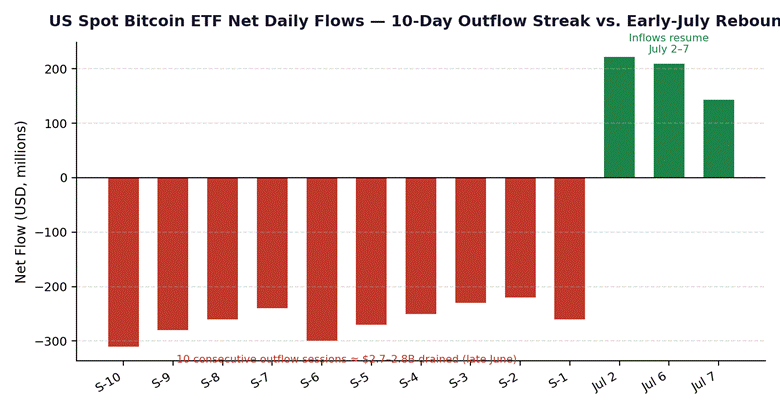
Figure 1. Illustrative daily net flow pattern across US spot Bitcoin ETFs, showing the ten-session outflow streak in late June followed by the early-July inflow rebound. Aggregate totals reflect figures reported by data cited via SoSoValue (via CoinDesk) and Farside Investors (via TechTimes); individual daily values are approximated for illustration.
The streak broke in the first days of July. On July 2–3, US spot Bitcoin ETFs recorded a combined single-day inflow of approximately $221.7 million — the largest daily intake in roughly two months — with Fidelity’s Wise Origin Bitcoin Fund (FBTC) responsible for close to three-quarters of that total. ARK 21Shares’ ARKB, VanEck’s HODL, and Valkyrie’s BRRR also posted modest inflows. Notably, BlackRock’s iShares Bitcoin Trust (IBIT), the largest fund in the complex by assets under management, recorded a further outflow that same session, suggesting rotation between issuers rather than uniform institutional re-entry. By July 6, however, IBIT itself turned positive with an inflow of roughly $209 million, a detail analysts flagged as a more meaningful institutional-conviction signal given the fund’s historical role as the bellwether of the group. Across the three sessions between July 2 and July 7, the complex absorbed an estimated $510 million in net new capital.
Analysts at research firms including 21Shares and HashKey have characterized the reversal as a cautious re-entry rather than a confirmed trend change. The timing coincided with a softer-than-expected June US jobs report, which reduced near-term pressure for further interest-rate hikes and made risk assets, including Bitcoin, comparatively more attractive. Whether the rebound extends will likely hinge on two forthcoming data points: the June consumer price index, due July 14, and the Federal Reserve’s next policy meeting on July 28–29. Because ETF flows are estimated to explain roughly 45% of weekly Bitcoin price moves, the flow data is treated by market participants less as a sentiment indicator and more as a structural driver of near-term price direction — every redemption forces a fund’s custodian to sell spot Bitcoin to return cash to authorized participants, and every creation requires the reverse.
Despite the improvement, the picture remains fragile. According to on-chain analytics from Glassnode, the average Bitcoin ETF buyer entered near $83,800, meaning a majority of institutional holders remain underwater at current prices — a dynamic that could either encourage continued patient holding or trigger further selling if prices weaken again. Ether and XRP-linked investment products also returned to net inflows over the same period, suggesting the improvement in sentiment was not confined to Bitcoin alone.
4. Bitcoin Price Action: Trading Well Below Late-2025 Highs

Illustration: a weathered bitcoin symbol on unstable ground above a volatile market.
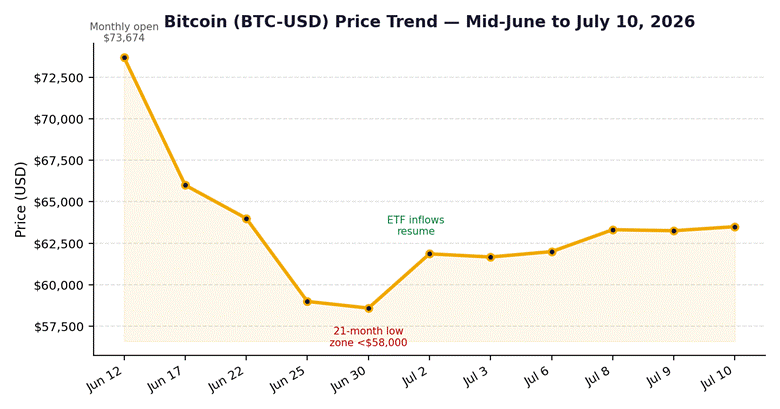
Figure 2. Bitcoin (BTC-USD) approximate price trajectory from the June monthly open through July 10, 2026, compiled from Yahoo Finance, YCharts, and CoinDesk.
Bitcoin’s price action over the past month illustrates the scale of the drawdown. The asset opened June near $73,674 before falling roughly 18% on the monthly candle to test a low below $58,000 in the final days of the month — its weakest level in approximately 21 months. That decline placed Bitcoin firmly below its 50-month exponential moving average (cited near $65,600–$65,750 in recent technical commentary), though it remained above the far longer-term 100-month EMA near $40,300, a level technical analysts have pointed to as evidence that the broader multi-year uptrend structure remains intact despite the correction.
A modest recovery followed the ETF inflow reversal described above. Bitcoin traded near $61,700 to $62,000 in the first week of July, and by July 8 had opened above $63,300 before a fresh escalation in the Israel-adjacent US-Iran military conflict briefly pushed oil prices up 4–5% and added a new source of macro volatility across risk assets, including crypto. As of July 9–10, Bitcoin traded in a band of roughly $63,250 to $63,500, up modestly on the day but still approximately 35% below its October 2025 cycle peak.
Several factors continue to dominate trader attention: the trajectory of US interest rates and inflation data, the pace of institutional ETF flows described above, ongoing geopolitical risk, and whale-level selling, with on-chain data suggesting more than $40 billion worth of Bitcoin has been sold by large, long-standing holders since the 2025 peak — though that selling pressure has reportedly begun to ease in recent weeks. Short-term technical levels most frequently cited by analysts include support near $58,000–$60,000 and resistance in the $65,000–$66,000 zone, with a sustained break above the latter seen as a precondition for renewed bullish momentum toward the $70,000 area.
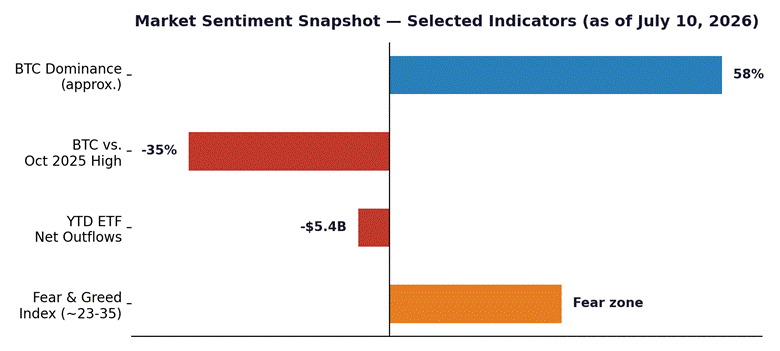
Figure 3. Selected sentiment and positioning indicators as of July 10, 2026. Figures are illustrative approximations drawn from Fear & Greed Index readings, SoSoValue ETF flow data, and general market-cap commentary; not intended as precise real-time values.
5. Blockchain Mergers and Corporate Consolidation Continue

Illustration: two corporate gears fusing into one, representing industry consolidation.
Despite the broader market slowdown, corporate activity within the blockchain infrastructure sector has remained brisk. The AI Financial–Perpetuals.com discussion described above is one visible example, but it sits alongside a wider pattern of consolidation as companies seek to reduce costs, diversify revenue, and expand service offerings amid depressed token valuations. Distressed and opportunistic acquisitions have become more common as smaller, thinly capitalized crypto-linked public companies — many of which raised capital during the 2024–2025 token-treasury boom — now face pressure to either restructure or sell core assets to stronger balance-sheet peers.
This dynamic reflects a maturing, if uneven, phase of industry development: infrastructure providers, custodians, and payments processors are increasingly viewed as acquisition targets in their own right, separate from the volatility of the tokens historically associated with their parent ventures. For strategic acquirers, buying a standalone operating business — such as a payments-processing subsidiary with genuine revenue — can offer more predictable value than exposure to a treasury heavy with a single, volatile token. Analysts expect this trend to continue through the remainder of 2026 as capital markets remain selective about which crypto-adjacent companies can access fresh funding on favorable terms.
Other Categories
6. Regulatory Discussions Continue Across Jurisdictions

Illustration: a courthouse pillar transforming into a digital ledger, orbited by global regulatory markers.
Policymakers in multiple regions continued to refine digital-asset frameworks this week, with taxation, reporting standards, and market-structure rules remaining the dominant themes. In the United States, regulatory attention has increasingly focused on politically connected crypto ventures: US Senator Elizabeth Warren has publicly urged the Securities and Exchange Commission to examine World Liberty Financial over a reported $75 million token-backed loan and potential securities-law concerns, while the White House has pushed back on conflict-of-interest allegations, with a spokesperson stating that the president’s assets are managed through independent, discretionary arrangements.
In Europe, regulators and market participants continue to work through implementation of the region’s Markets in Crypto-Assets (MiCA) framework, with commentary noting that while the continent has led on setting regulatory ambition, execution and compliance infrastructure still lag behind the rules on paper. The United Kingdom, meanwhile, has been advancing new crypto trading rules intended to widen access to global markets, though industry commentary suggests meaningful compliance hurdles remain before the framework is fully operational. Collectively, these developments point to a regulatory landscape that is neither uniformly restrictive nor uniformly permissive, but is converging — unevenly and at different speeds — toward clearer rules for custody, disclosure, and market conduct.
7. Developers Continue to Prioritize Blockchain Infrastructure

Illustration: a networked tower of circuit and blockchain tiles, representing infrastructure investment.
Beyond quantum defense specifically, developers across the industry continue to emphasize broader architectural resilience: interoperability between chains, trusted hardware for key management, and general security hardening. Industry research has noted that the nature of major crypto security incidents is shifting — smart-contract bugs, while still significant, are no longer the sole dominant category of loss, with 2025 alone seeing a reported $3.4 billion lost to hacks across the sector. That shift is pushing infrastructure teams to invest more heavily in areas such as validator and node security, cross-chain bridge design, and layer-2 proof systems, several of which — as noted above — carry the added benefit of contributing to quantum resistance even when that was not their primary design goal.
8. Market Sentiment and Outlook: A Divided Picture

Illustration: a split scene of sunrise and storm meeting at a balance scale, representing divided analyst sentiment.
Analyst opinion on Bitcoin’s near-term direction remains genuinely split. Optimists point to the end of the ETF outflow streak, BlackRock’s IBIT rejoining buyers, a softer US jobs report reducing rate-hike odds, and technical support holding near the $58,000–$60,000 zone as reasons to expect a gradual recovery toward $65,000–$70,000 over the balance of the summer. Skeptics counter that the recovery so far represents only a handful of positive sessions set against eight weeks of the heaviest outflows the ETF category has ever recorded, that the average ETF holder remains underwater at current prices, and that fresh geopolitical shocks — including the renewed US-Iran military escalation in early July — continue to inject volatility that could just as easily tip sentiment back toward the extreme-fear readings seen in June.
Two forthcoming catalysts are widely viewed as decisive for which narrative prevails: the June US consumer price index release on July 14, and the Federal Reserve’s policy decision on July 28–29. A cooler-than-expected inflation print combined with continued ETF inflows would likely reinforce the nascent recovery narrative; a hotter print, or a reversal back into outflows, would revive concerns that June’s drawdown was the start of a deeper correction rather than a mid-cycle pause. Longer term, the industry’s parallel investment in post-quantum cryptography, infrastructure hardening, and — however unevenly — clearer regulation suggests a sector attempting to mature structurally even as short-term price sentiment remains genuinely unresolved.
Conclusion
The period surveyed in this briefing captures a crypto industry operating on two timelines at once. On the short horizon, Bitcoin and its associated ETF complex are working through the aftershocks of the worst monthly outflow period since spot funds launched, with early but unconfirmed signs of stabilization emerging in the first two weeks of July. On the longer horizon, the industry is quietly but deliberately preparing for a threat that may not materialize for years: the arrival of a quantum computer capable of breaking the elliptic-curve cryptography underpinning nearly every major blockchain in production today. Layered between these two timelines are more idiosyncratic developments — the distressed sale talks around a Trump-linked payments venture, continued consolidation among blockchain infrastructure firms, and an uneven but advancing global regulatory conversation — each of which will shape the contours of the industry well beyond whatever direction Bitcoin’s price takes over the next several trading sessions.
As always in a market defined by rapid information flow and thin historical precedent, the figures and characterizations above should be treated as a snapshot rather than a forecast; readers with direct financial exposure to these assets should consult primary market data and qualified financial advisors before making investment decisions.
Sources & Further Reading
This briefing draws on reporting and data from the outlets below, organized by topic. Click any link to view the original source.
Quantum-Resistant Security (Section 1)
- Kavout — “Is Quantum Computing an Existential Threat to Bitcoin and Ethereum.”
- Webopedia — “8 Quantum Resistant Crypto Projects to Watch in 2026.” https://www.webopedia.com/crypto/learn/post-quantum-crypto-projects/
- Tangem — “Top 7 Quantum Resistant Crypto Coins in May 2026.” https://tangem.com/en/blog/post/quantum-resistant-crypto/
- Yellow.com — “Post-Quantum Cryptography And Blockchain: 10 Things Every Crypto Holder Needs To Know In 2026.” https://yellow.com/research/post-quantum-cryptography-blockchain-2026
- Nervos — “Quantum Resistance in Blockchains: Preparing for a Post-Quantum Computing World.” https://www.nervos.org/knowledge-base/quantum_resistance
- Hedera Blog — “Post-Quantum Cryptography and Blockchain.” https://hedera.com/blog/post-quantum-cryptography-and-blockchain/
- MDPI (Journal of Cybersecurity and Privacy) — “A Comprehensive Review of Quantum-Resistant Architectures for Blockchain Security.” https://www.mdpi.com/2413-4155/8/2/47
- arXiv — “Towards Post-Quantum Blockchain: A Review on Blockchain Cryptography Resistant to Quantum Computing Attacks.” https://arxiv.org/pdf/2402.00922
- arXiv — “Quantum Disruption: An SoK of How Post-Quantum Attackers Reshape Blockchain Security and Performance.” https://arxiv.org/pdf/2512.13333
AI Financial / World Liberty Financial Payments Sale (Section 2)
- PYMNTS — “Trump Family Crypto Company Looks to Sell Payments Firm.” https://www.pymnts.com/cryptocurrency/2026/trump-family-crypto-company-sell-payments-firm/
- International Business Times — “Trump Family Pockets Half A Billion As Trump-Backed Crypto Firm Moves To Sell Only Revenue-Generating Business.” https://www.ibtimes.com/trump-world-liberty-ai-financial-fire-sale-wlfi-investor-losses-3805070
- FinanceFeeds — “Trump Family Crypto Project-Linked AI Financial in Talks to Sell Core Business for Up to $15 Million.” https://financefeeds.com/trump-family-crypto-project-linked-ai-financial-in-talks-to-sell-core-business-for-up-to-15-million/
- The Crypto Times — “Trump-Linked WLFI Treasury Firm to Sell Core Unit for $15M After Token Crash.” https://www.cryptotimes.io/2026/07/08/trump-linked-wlfi-treasury-firm-to-sell-core-unit-for-15m-after-token-crash/
- Bitget News — “WLFI Fintech Company AI Financial Plans to Sell Its Core Payment Business for Up to $15 Million.” https://www.bitget.com/amp/news/detail/12560605496074
- BigGo Finance — “Trump-Linked AI Financial in Talks to Sell Core Payments Subsidiary to Perpetuals.com.” https://finance.biggo.com/news/114a6dfb-413b-471f-a52a-d1afbd3e8f35
Bitcoin ETF Flows & Institutional Sentiment (Section 3)
- CoinDesk — “Finally, $221 Million Flows Into Bitcoin ETFs, Ending a Painful 10-Day Outflow Streak.” https://www.coindesk.com/markets/2026/07/03/finally-usd221-million-flow-into-bitcoin-etfs-ending-a-painful-10-day-outflow-streak
- CoinDesk — “Live Markets: Bitcoin and Ether ETFs Drew Inflows Monday.” https://www.coindesk.com/tech/2026/07/07/live-markets-bitcoin-and-ether-etfs-drew-inflows-on-monday
- TechTimes — “Bitcoin ETF Outflow Streak Ends at $2.7B as June Jobs Data Cools Rate Risk.” https://www.techtimes.com/articles/319653/20260703/bitcoin-etf-outflow-streak-ends-27b-june-jobs-data-cools-rate-risk.htm
- TechTimes — “Bitcoin ETF Inflows Hit $510M Over 3 Days: When BlackRock Leads, Bitcoin Follows.” https://www.techtimes.com/articles/319974/20260709/bitcoin-etf-inflows-hit-510m-over-3-days-when-blackrock-leads-bitcoin-follows.htm
- Yahoo Finance — “Bitcoin ETFs Draw in $221 Million Alongside Renewed Buying From Long-Term Investors.” https://finance.yahoo.com/markets/crypto/articles/bitcoin-etf-news-inflows-hit-105959495.html
- The Coin Republic — “Bitcoin ETFs End $2.7B Outflow Streak as Fresh Capital Returns.” https://www.thecoinrepublic.com/2026/07/04/bitcoin-etfs-end-2-7b-outflow-streak-as-fresh-capital-returns/
- Cryptonomist — “Bitcoin ETFs Inflows Signal Shift After Historic Outflow Streak.” https://en.cryptonomist.ch/2026/07/08/bitcoin-etfs-inflows-shift/
- 99Bitcoins — “Bitcoin ETF News: Inflows Hit $221M as 10-Day Outflow Streak Ends.” https://99bitcoins.com/news/bitcoin-btc/bitcoin-etf-news-inflows-outflow-streak-ends/
- Bitbo — “Bitcoin ETF Flows (Table & Chart).” https://bitbo.io/treasuries/etf-flows/
Bitcoin Price Action & Market Data (Section 4)
- Yahoo Finance — “Bitcoin USD (BTC-USD) Price History & Historical Data.” https://finance.yahoo.com/quote/BTC-USD/history/
- YCharts — “Bitcoin Price (Daily) — Historical Data & Trends.” https://ycharts.com/indicators/bitcoin_price
- Fortune — “Current Price of Bitcoin for July 2, 2026.” https://fortune.com/article/price-of-bitcoin-07-02-2026/
- Changelly — “Bitcoin (BTC) Price Prediction 2026–2040.” https://changelly.com/blog/bitcoin-price-prediction/
- CoinDCX — “Bitcoin (BTC) Price Prediction: Daily, Weekly 2026–2040.” https://coindcx.com/blog/price-predictions/bitcoin-price-weekly/
- Robinhood — “Buy Bitcoin — BTC Price Today, Live Charts and News.” https://robinhood.com/us/en/crypto/BTC/
Sections 5–8 (corporate consolidation, global regulation, blockchain infrastructure, and market outlook) draw on the same sources listed above, alongside general industry commentary current as of the briefing date.
 By
By




 By
By