
Inside Hyperliquid’s Token Economy — and the Questions That Remain Unresolved
Market data compiled as of July 14, 2026 · For informational purposes only
Hyperliquid’s native token, HYPE, has spent the past year moving from a relatively obscure exchange-token listing into one of the ten largest cryptocurrencies by market capitalization, according to figures published by CoinGecko and CoinMarketCap. The token’s rise has coincided with the broader growth of the Hyperliquid blockchain, a layer-one network built primarily to host on-chain perpetual futures and spot trading. Industry commentary has increasingly framed Hyperliquid less as a typical decentralized finance protocol and more as a fee-generating exchange business whose token is designed to capture a share of that revenue.
This piece sets out what is publicly known about HYPE’s market position, tokenomics, and recent protocol developments, along with the risks and open questions that accompany them. Figures cited throughout are drawn from exchange and data-aggregator sources including CoinGecko, CoinMarketCap, Coinbase, and Kraken, and should be read as reference points rather than fixed values, since cryptocurrency prices and supply figures change continuously and different platforms report them with minor variation.
1. What Hyperliquid Is
Hyperliquid describes itself as a performant layer-one blockchain built specifically to support high-frequency, on-chain trading. The network is composed of two linked components: HyperCore, which hosts a fully on-chain order book for perpetual futures and spot markets, and HyperEVM, an Ethereum Virtual Machine-compatible environment that allows developers to build smart-contract applications on top of the same base layer. Both components are secured by a single consensus mechanism called HyperBFT, a delegated proof-of-stake protocol that the project states can process approximately 200,000 orders per second with sub-second, and in some descriptions 0.07-second, block finality.
Consensus is maintained by a validator set that token holders can delegate HYPE to; reporting indicates this set was expanded from 24 to 27 active validators in May 2026, a change described by market commentary as a modest step toward greater network decentralization. A seven-day unstaking queue is cited as a deterrent against large-scale attempts to seize control of the validator set. The project’s developer, Hyperliquid Labs, has stated it is self-funded and has not raised external venture capital, a detail that has been referenced repeatedly in market commentary as distinguishing it from many venture-backed layer-one projects.
Beyond crypto-native derivatives, Hyperliquid’s order book has been extended to other asset classes, including equities, commodities, and foreign exchange pairs, according to the protocol’s own marketing material and secondary reporting. Users can also borrow, lend, and issue assets on the network. This breadth of function is one reason analysts have periodically compared Hyperliquid’s business model to that of a traditional trading venue rather than a narrower single-purpose DeFi application.
2. Market Snapshot
The table below summarizes headline figures reported across major data aggregators as of the second week of July 2026. Because HYPE trades continuously across dozens of exchanges, and because circulating-supply figures are updated on different schedules by different platforms, the values below vary slightly by source; ranges are given where discrepancies were material.
| Metric | Reported Value | Source |
| Price (14 Jul 2026) | $60 – $67 | CoinMarketCap, Coinbase, CMC AI |
| Market capitalization | $14.3B – $16.3B | CoinGecko, CoinMarketCap, Coinbase |
| Fully diluted valuation | $61.4B – $69.2B | CoinGecko, CoinMarketCap, CoinStats |
| Market cap rank | #9 – #11 | CoinMarketCap, CoinGecko, Kraken |
| 24h trading volume | $325M – $402M | Coinbase, CoinMarketCap, Kraken |
| Circulating supply | ~220M – 253M HYPE | CoinGecko, CoinMarketCap, Kraken |
| Total supply | ~955.3M HYPE | CoinGecko |
| Maximum supply | 1,000,000,000 HYPE | CoinGecko, CoinMarketCap |
| All-time high | $76.67 – $76.70 (16 Jun 2026) | Coinbase, crypto.news |
| All-time low | $3.81 (29 Nov 2024) | crypto.news |
| 7-day price change (early Jul) | -7.00% | CoinGecko |
| 30-day price change (early Jul) | +15.51% | crypto.news |
Table 1. HYPE headline market metrics, as reported by major data aggregators, week of 7-14 July 2026.
3. Price Trajectory
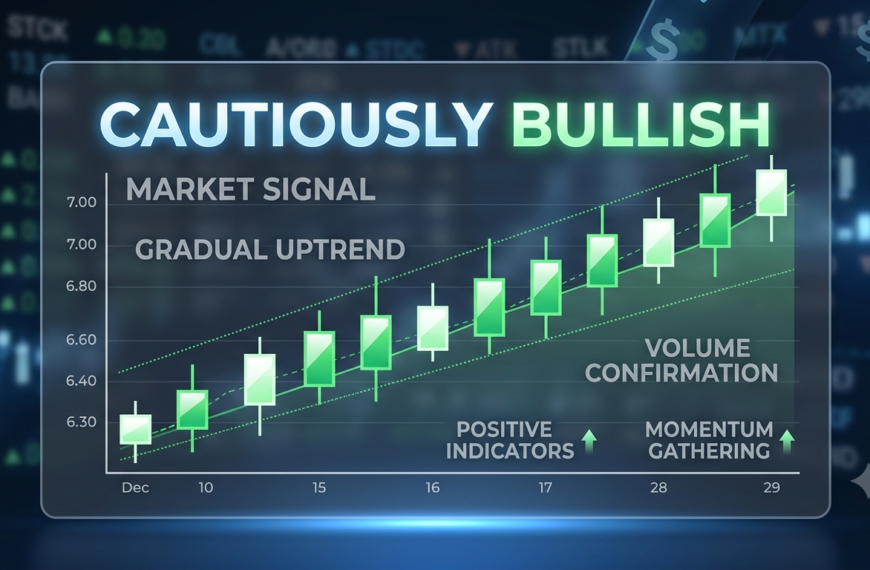
HYPE listed at a price near its recorded all-time low of $3.81 in late November 2024, according to price-history data published by crypto.news. From that point, the token entered an extended uptrend that data aggregators describe as a roughly 64.77% gain over the trailing twelve months as of early July 2026, before touching its current all-time high of approximately $76.70 in mid-June 2026. Trading has since pulled back into the low-to-mid $60s, with CMC AI’s market commentary characterizing recent price action as ‘cautiously bullish’ and noting technical resistance in the $65-$70 range.
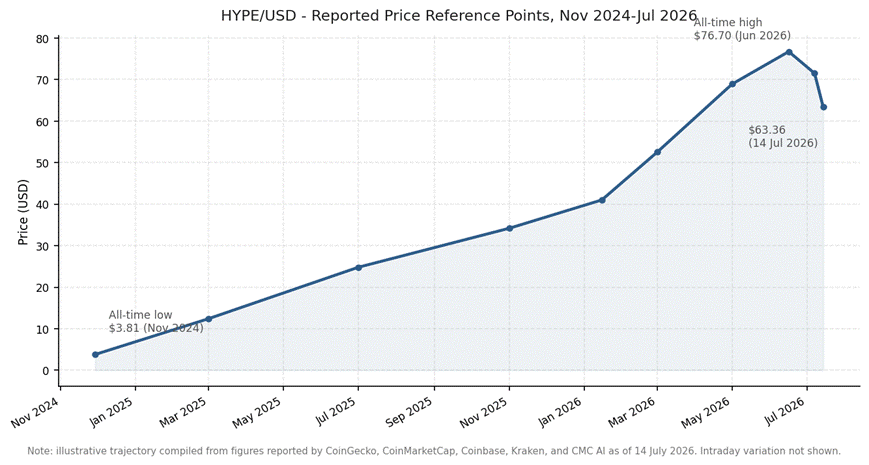
Figure 1. Illustrative HYPE price trajectory, compiled from reference points reported by CoinGecko, CoinMarketCap, Coinbase, Kraken, and CMC AI. Intraday volatility is not reflected.
Analysts covering the token have attributed the pullback from June’s peak to a combination of routine profit-taking, a large scheduled token unlock, and broader rotation across altcoin markets, rather than to any single identified catalyst. A $630 million token unlock on July 6, 2026, was cited by MEXC’s market desk as a source of near-term supply pressure, though the same report noted this had not, at that point, produced a sustained breakdown in price.
4. Tokenomics and the Buyback Model
Hyperliquidserves several functions within the network: it is used for staking toward network security, for participating in on-chain governance, for paying gas fees on HyperEVM, and for discounts on trading fees. A structural feature that has drawn particular attention from commentators is the protocol’s fee-distribution mechanism, sometimes referred to as the Assistance Fund, which reporting from Forbes and other outlets describes as directing a large majority — cited as approximately 99% — of trading fees generated on the platform toward buying back and burning Hyperliquid tokens on the open market.
This mechanism has been framed by some analysts as evidence of a ‘business-like’ token design, in contrast to tokens whose value accrual to holders is less directly tied to platform revenue. CoinStats’ analysis noted that Hyperliquid was, by one 2026 estimate, trading at roughly 10 times revenue, compared with a 15-25 times range often cited for more established exchange and fintech businesses —
A gap that analysis suggested could support further valuation upside if growth and fee generation are sustained, while cautioning that the comparison rests on assumptions about durability of that growth.
| Supply Category | Approximate Amount | Share of Max Supply |
| Circulating supply | ~220M – 253M HYPE | ~22% – 25% |
| Unlocked and tradable (per CoinGecko) | ~455.0M HYPE | ~45.5% |
| Total supply issued to date | ~955.3M HYPE | ~95.5% |
| Maximum supply (protocol cap) | 1,000,000,000 HYPE | 100% |
Table 2. Hyperliquid supply structure, as reported by CoinGecko and CoinMarketCap. Figures from different aggregators are not fully reconciled and should be treated as approximate.
The spread between circulating market capitalization and fully diluted valuation — roughly 4.3 times by one July 2026 estimate — reflects the scale of Hyperliquid supply still to be unlocked over time.
Market commentary has generally treated this overhang as a structural factor to monitor rather than an immediate threat, noting that unlock events have historically produced short-term price pressure without derailing the token’s longer-term trend, though this pattern is not guaranteed to hold for future unlocks.
5. Protocol Development and Institutional Access
Hyperliquid’s codebase has gone through several publicly documented upgrades over the past year. HIP-3, described as enabling permissionless perpetual futures, allows third-party builders to deploy their own perpetual markets by staking HYPE.
Hyperliquid was reported as having gone live in October 2025. HIP-4, an ‘Outcome Markets’ upgrade introducing fully collateralized prediction-market and options-style instruments without funding-rate mechanics, followed in February 2026. The validator set expansion from 24 to 27 members was recorded in May 2026.
| Date | Development | Stated Purpose |
| Oct 2025 | HIP-3: Permissionless Perpetuals | Allows builders to deploy custom perpetual futures markets by staking HYPE |
| Feb 2026 | HIP-4: Outcome Markets | Introduces collateralized prediction-market and options-style contracts |
| May 2026 | Validator Set Expansion | Increases active validators from 24 to 27 |
| Jun 2026 | Bitwise Hyperliquid ETF (BHYP) launch | Provides regulated, direct exposure to HYPE via a U.S.-listed fund |
| Jul 2026 | $630M token unlock | Scheduled release of previously locked HYPE supply |
Table 3. Selected Hyperliquid protocol and market developments, October 2025 – July 2026, per project and news sources.
Institutional access to Hyperliquid has also broadened. Asset manager Bitwise added HYPE to its multi-asset Bitwise 10 Crypto Index Fund at a reported weighting near 0.95% following a rebalance, and separately launched a dedicated Bitwise Hyperliquid ETF, which according to Bitwise’s own disclosures purchased more than 77,100 HYPE tokens in June 2026.
Crypto.news reported that this fund experienced sixteen consecutive days of inflows after its May listing before seeing outflows begin, a pattern the outlet described as an early test of whether ETF-driven demand represents a durable new source of buying pressure or a more cyclical one. Filings by 21Shares for related products were also noted in coverage, though the current status of those filings was not confirmed in the sources reviewed for this piece.
6. Competitive Position and Valuation Comparisons
Commentary comparing Hyperliquid to other decentralized derivatives platforms has frequently referenced GMX, an earlier-generation perpetuals protocol, as a point of contrast. One CoinStats analysis put GMX’s market capitalization at roughly $70.67 million — by that estimate, about 228 times smaller than Hyperliquid’s — and suggested that while GMX demonstrated that profitable on-chain trading protocols can command meaningful valuations, its ceiling was constrained by narrower product scope and smaller market share relative to Hyperliquid’s broader offering.
| Comparable Asset | Approx. Market Cap | Note |
| Hyperliquid (HYPE) | $14.3B – $16.3B | Perpetuals, spot, and EVM-based DeFi on a dedicated L1 |
| GMX | ~$70.67M (per CoinStats, mid-2026) | Earlier-generation on-chain perpetuals protocol |
| TRON, Dogecoin, Solana | Comparable range to HYPE | Cited by Coinbase as assets of similar market-cap size |
Table 4. Selected market-capitalization comparisons referenced in coverage of HYPE, mid-2026.
Coinbase’s asset page separately lists TRON, Dogecoin, and Solana as tokens of broadly comparable market-capitalization size to HYPE, though these networks differ substantially from Hyperliquid in function and design, limiting the usefulness of a direct comparison beyond market size alone.
7. Risks and Points of Scrutiny
Several risk factors recur across the sources reviewed. First, token-supply dilution remains a live consideration: with less than a quarter of maximum supply in circulation by some estimates, scheduled unlocks such as the $630 million release on July 6, 2026, are likely to continue periodically, and their effect on price has not been uniform across past events.
Second, regulatory attention has increased in at least one jurisdiction: the Monetary Authority of Singapore added Hyperliquid to its Investor Alert List, prompting the exchange to state publicly that it had never claimed to be licensed or authorized by that regulator. The practical implications of this listing for users and for the protocol’s broader regulatory standing were not detailed in the sources available for this piece.
Third, sentiment indicators from social platforms present a mixed picture. Coinbase’s own data cited a majority-neutral tone across monitored posts, with bullish mentions outweighing bearish ones by a wide margin but still representing well under half of total volume, and noted the asset was ‘becoming less newsworthy’ by one measure of published article counts in the period reviewed.
Fourth, ETF-related demand, while a new and potentially stabilizing source of inflows, is explicitly described in at least one source as capable of reversing quickly if broader risk sentiment shifts, meaning it should not automatically be read as a source of permanent price support.
Finally, as with any actively traded digital asset, HYPE’s price has shown substantial short-term volatility — including a reported single-day decline of 5.72% alongside a weekly gain of 6.71% within the same broad period covered by the sources above — underscoring that headline trend figures can mask considerable swings over shorter windows.
8. Outlook
Whether HYPE’s valuation can extend meaningfully beyond current levels appears, based on the analysis reviewed, to depend less on short-term sentiment and more on whether Hyperliquid can sustain its rate of fee generation and trading-volume growth while managing both supply dilution and increasing competition in the on-chain derivatives space.
CoinStats’ framing of the question — whether the protocol can be valued more like a high-growth exchange business than a conventional Layer 1 token — appears to capture how much of the current market debate is being framed, though this remains one interpretation among several, and the underlying revenue and growth assumptions it depends on have not been independently verified for this piece.
Near-term technical levels flagged in coverage include support around $60-65 and resistance in the $65-70 range, with a sustained close above that resistance band cited by CMC AI as a marker analysts are watching over the days following July 14, 2026.
Beyond the immediate price action, the more structurally significant developments to track are likely to be the pace of further institutional product launches, the market’s absorption of scheduled token unlocks, and any additional regulatory positions taken by authorities beyond Singapore’s Monetary Authority.
Disclosure: This document is a compilation and paraphrase of publicly available market data and commentary as of July 14, 2026. It is provided for informational purposes only, does not constitute financial or investment advice, and should not be relied upon as the sole basis for any investment decision.
Cryptocurrency prices are highly volatile and figures cited here will have changed by the time of reading. Sources referenced include CoinGecko, CoinMarketCap, Coinbase, Kraken, crypto.news, CoinStats, and MEXC market commentary.
 By
By



 By
By