
THE WEEKLY LEDGER • CRYPTO MARKETS
The One Coin Quietly Outrunning Every Other Crypto Right Now
While Bitcoin fights to hold $64K and the broader market stalls, Zcash (ZEC) has quietly ripped higher — up 16% this week and more than 30x since its 2024 lows.
Published July 13, 2026 | 9 min read
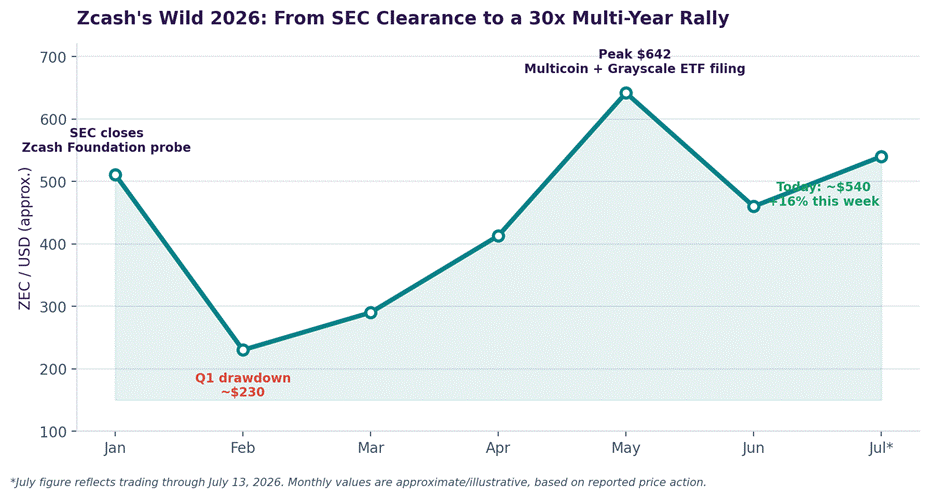
ZEC has gone from a forgotten 2023-era privacy coin to the market’s best-performing large-cap asset of 2026.
Every market cycle produces one asset that nobody was watching closely enough. In 2026, that asset is Zcash. While Bitcoin grinds sideways below $64,000 and most of the top 20 coins are flat-to-down on the month, ZEC has surged roughly 16% in the past seven days alone, trading near $540 — and is now up more than 30x from its 2024 lows of around $16-20.
This isn’t meme-coin froth. It’s a coin that was left for dead after years of exchange delistings and regulatory suspicion, now being re-rated by institutions as “essential infrastructure” rather than a niche anonymity tool. Here’s the full story: the numbers, the catalysts, who’s actually buying, and what could go wrong.
“The same regulatory environment that pressured privacy coins in 2023-2024 has evolved through 2025-2026 into one where financial privacy is being treated as normal, not suspicious.”
The Snapshot: Zcash at a Glance (July 13, 2026)
| Metric | Figure |
| Current price (approx.) | $538 – $543 |
| 7-day change | +16% |
| 24-hour change | +5% to +6% |
| Market cap | ~$9.0 – 9.1 billion |
| Market cap rank | #13 – #14 |
| 2025 peak (Nov 2025) | ~$748 |
| 2024 low | ~$16 – $20 |
| Gain from 2024 low | 650% – 4,500%+ (up to ~30x) |
| Shielded supply (privacy pool) | ~31% of circulating ZEC |
Figures are approximate and reflect reported price/market data as of July 13, 2026.
1. From Forgotten to Fastest-Growing
Zcash launched in 2016 as one of the original “privacy coin” projects, using zero-knowledge cryptography (zk-SNARKs) to let users transact without revealing sender, receiver, or amount. For most of 2022-2024, it was treated as a regulatory liability: major exchanges delisted privacy coins ahead of the EU’s MiCA framework, and Zcash traded as low as $16.
That began reversing after the November 2024 halving cut ZEC issuance in half. Then came the real catalysts. On January 15, 2026, the SEC closed a nearly two-year investigation into the Zcash Foundation without enforcement action — instantly removing the regulatory overhang that had kept institutions on the sidelines for years.
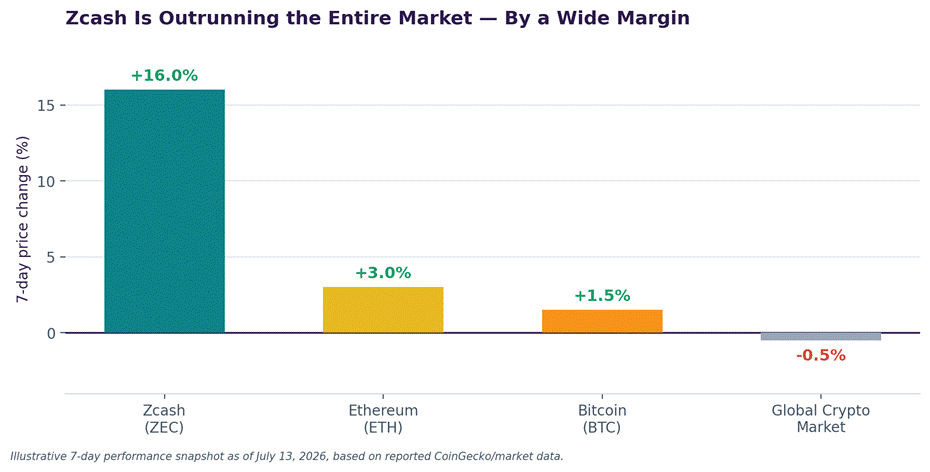
ZEC’s 7-day performance dwarfs Bitcoin, Ethereum, and the broader crypto market.
2. The Catalysts Behind the Rally
- Regulatory clarity: the SEC’s January clearance removed years of institutional hesitation in one announcement.
- The first privacy-coin ETF bid: Grayscale filed to convert its Zcash Trust into the first-ever U.S. spot ETF for a privacy coin (ticker ZCSH), filed May 12, 2026.
- Institutional accumulation: Multicoin Capital disclosed a significant ZEC position on May 5, 2026, framing it as a hedge against rising political risk to visible wealth. Cypherpunk Technologies, Maelstrom Fund (linked to Arthur Hayes), and Reliance Global Group followed with meaningful accumulation.
- Distribution expansion: Robinhood listed ZEC, and THORChain integrations expanded DeFi and retail access.
- The Ironwood upgrade: a network upgrade targeting a 300% throughput improvement, locked in for July 28, 2026 — the same week as the Fed’s next rate decision.
- Mining infrastructure: Foundry Digital, the world’s largest Bitcoin mining pool, launched an institutional-grade Zcash mining pool in April 2026, adding hashpower and legitimacy.
3. This Time It’s Backed by Real Usage, Not Just Hype
The most important data point isn’t the price — it’s what’s happening inside the network. Zcash’s shielded pool (the fully private transaction layer) has grown from roughly 8% of circulating supply in 2024 to approximately 31% by mid-2026. That’s around 5.2 million ZEC that holders have moved from transparent, exchange-liquid addresses into private, effectively illiquid storage.
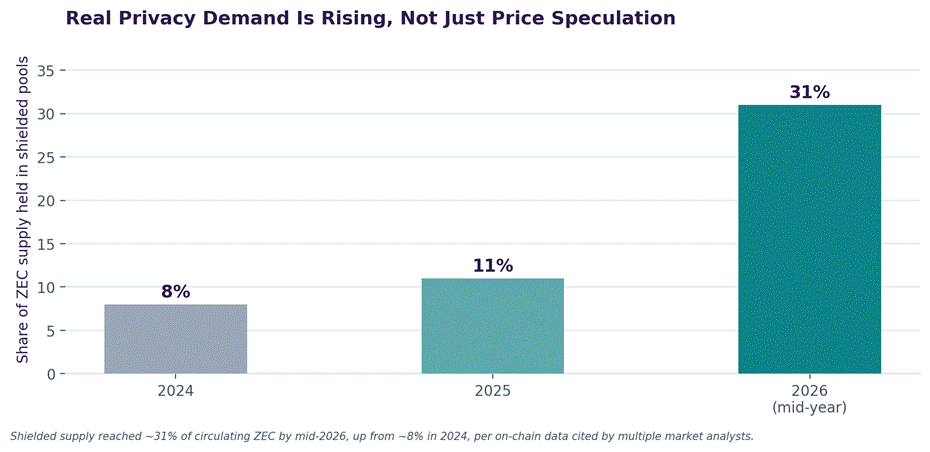
Rising shielded-pool adoption suggests genuine demand for privacy, not just speculative trading.
Shielded transactions accounted for roughly 59% of network activity in a recent monthly snapshot, with year-to-date averages near 40%. That combination — falling new supply from the 2024 halving, plus a growing share of existing supply being locked into shielded, non-trading storage — is a textbook supply squeeze setup, and analysts increasingly point to it as the fundamental engine behind the rally, distinct from short-term short squeezes in the futures market.
4. Who’s Actually Buying ZEC Right Now
Unlike Bitcoin’s retail-heavy ownership base, Zcash’s 2026 rally has been driven disproportionately by a small number of disclosed institutional and fund-level buyers, alongside a broader wave of privacy-conscious retail investors re-engaging after years on the sidelines.
| Holder | Type | Disclosed Position / Role |
| Multicoin Capital | Crypto venture fund | Significant position, accumulated since Feb 2024 |
| Cypherpunk Technologies | Digital-asset treasury company | ~1.43% of total ZEC supply |
| Maelstrom Fund | Family office (Arthur Hayes) | Growing ZEC holdings |
| Reliance Global Group | Public holding company | Increased ZEC allocation |
| Grayscale | Asset manager | Filed to convert Zcash Trust into spot ETF (ZCSH) |
| Foundry Digital | Mining infrastructure | Launched institutional ZEC mining pool |
The retail side of the story looks like a familiar crypto-adoption pattern layered onto a new narrative: privacy-focused investors, technologists, and people newly worried about financial surveillance and asset seizure risk are the demographic driving renewed search interest and trading volume, alongside the broader profile of crypto holders — still skewed toward millennial, male, tech-adjacent investors, but with the “privacy as normal” narrative pulling in a more ideologically motivated buyer than a typical altcoin rally.
5. What Could Derail Zcash
| Risk Factor | Why It Matters |
| Grayscale ETF rejection | Would remove the clearest institutional on-ramp and could trigger a sharp pullback |
| Thin on-chain/social support | Analysts like Alphractal’s Joao Wedson warn the rally lacks broad-based confirmation |
| Futures-driven short squeeze | Part of the move is attributed to forced short covering, not organic demand |
| Regulatory reversal | Privacy coins remain a target for future AML/CFT rulemaking in the EU and elsewhere |
| Competition | Monero and newer privacy protocols compete for the same institutional narrative |
Grayscale’s own Zcash Trust illustrates the volatility risk well: its net assets fell from $200.4 million to $99.4 million in Q1 2026 alone, as ZEC slid from roughly $509 to $254 in a matter of weeks — a 50% negative return for trust holders in a single quarter, before the subsequent rally back above $540.
Read more About OPN – Solana –XRF
The Bottom Line
Zcash’s 2026 story is bigger than a single green week. It’s a coin that spent years as a regulatory pariah, cleared its biggest legal overhang in January, picked up its first serious institutional ETF filing in May, and is now showing rising real-world privacy usage alongside the price move. That combination — regulatory clarity, institutional capital, and genuine on-chain adoption — is a different kind of rally than the hype-driven spikes that have defined past privacy-coin cycles.
Whether ZEC becomes crypto’s next durable asset class or the market’s next cautionary tale likely comes down to two things in the next few weeks: whether the Ironwood upgrade ships cleanly on July 28, and whether Grayscale’s ETF filing gains real regulatory traction. Until then, ZEC remains exactly what it’s been all year — the most volatile, most-watched outperformer in the market.
Everyone was watching Bitcoin’s ceiling. Almost nobody was watching Zcash’s floor disappear.
Disclaimer: This article is for informational purposes only and is not investment advice. Cryptocurrency prices, especially smaller-cap and privacy assets, are highly volatile and can reverse sharply. Figures are approximate and reflect publicly reported data as of July 13, 2026.
 By
By



 By
By