
Published July 16, 2026 | 10–12 min read |
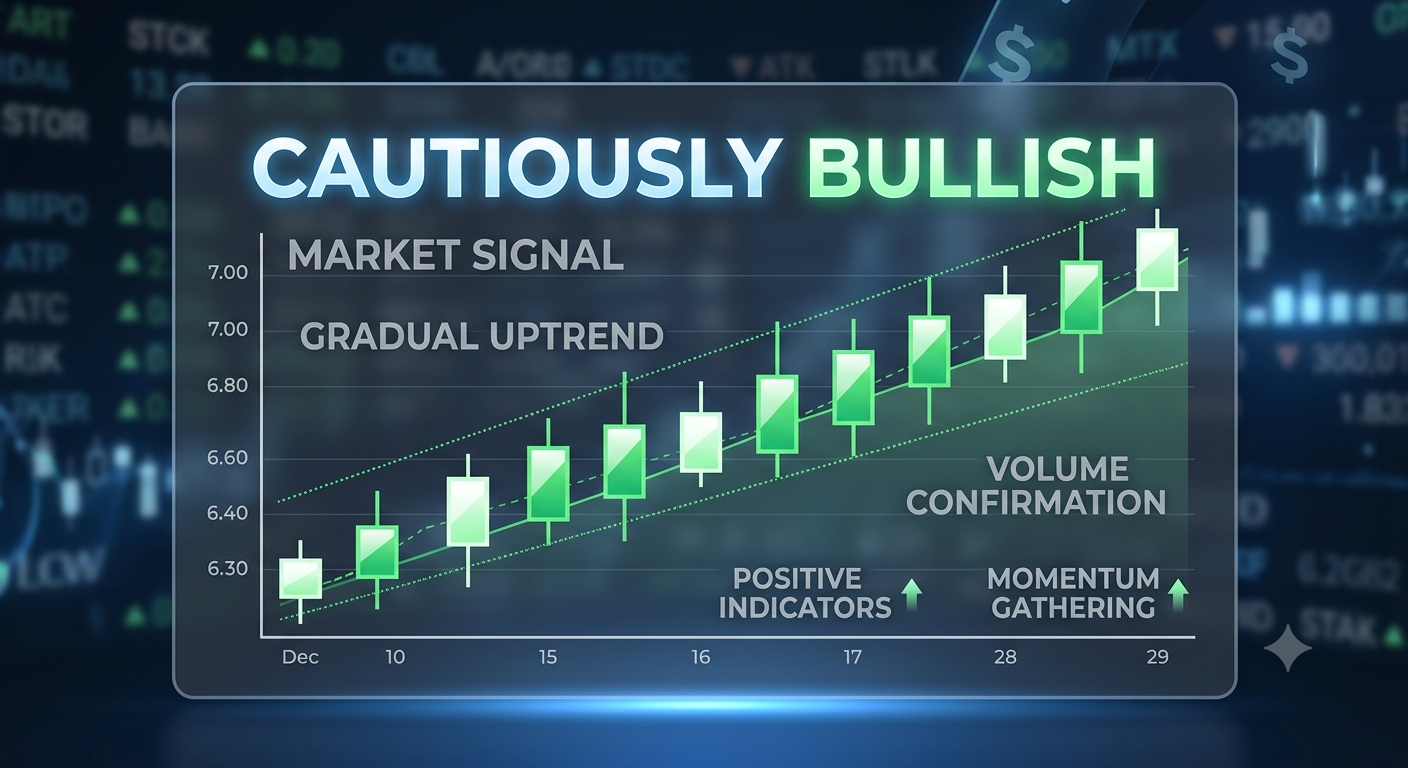
Macro cooling, ETF re-entry, real-world-asset momentum, and a wave of regulatory legitimization are pulling crypto sentiment out of “Fear” — but the recovery is fragile, uneven, and worth reading carefully rather than celebrating outright.
Abstract
| TL;DR — Key Takeaways Sentiment has moved from “Fear” toward “cautiously bullish” after a rough June, but the Fear & Greed Index was still around 28 in mid-July — this is a tentative shift, not euphoria.Softer U.S. jobs data has cooled expectations of aggressive Fed rate hikes, which historically supports risk assets like Bitcoin.U.S. spot Bitcoin ETFs snapped an eight-week outflow streak, posting roughly $197 million in net inflows for the week ending July 10, 2026 — modest, but a real change in direction.Real-World Asset (RWA) tokenization, led by protocols like Ondo Finance, continues attracting institutional attention even while the ONDO token itself has struggled to convert that narrative into price.Pakistan and Tanzania illustrate two different stages of the same global trend: governments choosing regulation over prohibition.None of this is investment advice — see the disclaimer at the end of this piece. |
Why “Cautiously Bullish” Is the Right Phrase Right Now
Crypto commentary tends to swing between two extremes: euphoric “we’re going to the moon” takes and doom-laden “it’s all over” takes. Neither describes where the market actually sits in mid-July 2026. After a bruising June that saw Bitcoin briefly touch a 21-month low below $58,000 and pushed the Fear & Greed Index deep into fear territory, four separate threads have started pulling in a more constructive direction at the same time. None of them, on its own, would justify calling this a bull market. Together, they explain why analysts are reaching for a more careful phrase: cautiously bullish.
This piece walks through each of those four threads — inflation expectations, Bitcoin ETF flows, real-world asset (RWA) tokenization, and regulatory developments in Pakistan and Tanzania — and then turns to what this actually means for someone deciding how to act on it, if at all.
1. Lower Inflation Expectations Are Improving Risk Appetite
Crypto doesn’t trade in a vacuum. Bitcoin and other risk assets are highly sensitive to what traders expect the U.S. Federal Reserve to do with interest rates, because rate expectations drive the cost of borrowing and the relative appeal of holding cash versus holding volatile assets. When inflation looks hot, markets price in more rate hikes (or fewer cuts), which tends to push money out of speculative assets and into safer, yield-bearing instruments. When inflation cools, the opposite tends to happen.
What changed: A weak June U.S. jobs report — showing only around 57,000 non-farm payrolls added — reduced pressure on the Fed to keep hiking, and this cooling of rate-hike expectations is widely credited as one of the catalysts behind Bitcoin’s early-July rebound from sub-$58,000 levels. Markets are now also watching the Fed’s July 28–29 meeting closely, along with each new inflation print, since a hotter-than-expected reading could quickly reverse this dynamic.
It’s worth being precise about the mechanism here, because it’s easy to overstate. Improving inflation expectations don’t directly “cause” Bitcoin to rise. What they do is reduce one specific headwind — the risk of aggressive monetary tightening — that had been weighing on risk assets broadly, crypto included. That’s a meaningfully different claim from “inflation data is bullish for Bitcoin,” and the distinction matters if you’re trying to reason about what could reverse this trend.
2. Bitcoin ETFs Have Returned to Net Inflows
Spot Bitcoin ETFs — exchange-traded funds that hold actual Bitcoin and let investors gain exposure through a normal brokerage account — have become one of the clearest real-time gauges of institutional appetite for the asset. Research cited in 2026 market coverage estimates that ETF flows now explain roughly 45% of weekly Bitcoin price movement, which is a striking number: it means the daily flow ledger isn’t just a sentiment indicator, it’s a structural input into where the price actually goes next.
The chart below shows the pattern that triggered this week’s more optimistic framing: a sustained stretch of daily outflows through late June, followed by a reversal that began on July 2 and continued, with some volatility, through the following week.
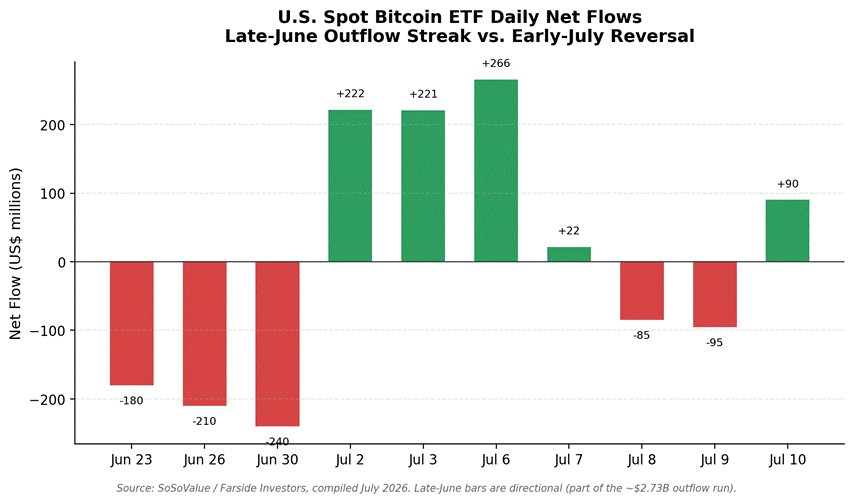
Figure 1: U.S. spot Bitcoin ETF daily net flows, late June–July 10, 2026. Late-June bars are directional, reflecting the broader ~$2.73B, 10-day outflow run reported by SoSoValue and Farside Investors.
The headline numbers: U.S. spot Bitcoin ETFs posted roughly $197 million in net inflows for the trading week ending July 10, 2026, ending an eight-week streak of outflows and offering the first sign of renewed institutional appetite since early May. BlackRock’s IBIT fund led the reversal, pulling in $209.4 million in a single session on July 6.
It’s important not to overinterpret a single strong week. Despite the recent rebound, U.S. spot Bitcoin ETFs were still showing billions of dollars in net year-to-date outflows as of early July, highlighting that the sector had not fully recovered from earlier withdrawals. Total net assets, at about $77.3 billion in mid-July, also remained below previous highs, reinforcing that the recovery was incomplete rather than decisive. Analysts have broadly described the turnaround as “a meaningful signal, not a solved problem,” reflecting a cautiously bullish outlook: improving momentum, but with reasons for restraint. Another important technical detail is that ETF inflows do not always result in equivalent same-day purchases of Bitcoin on the open market. Authorized participants can satisfy some investor demand by delivering Bitcoin they already hold instead of buying new coins immediately. As a result, reported inflows are a credible indicator of renewed investor interest but are not a direct one-to-one measure of immediate market buying pressure.
EDUCATIONAL + ANALYSIS
3. Real-World Asset (RWA) Tokens Like ONDO Continue Attracting Attention
If ETFs are about wrapping crypto exposure inside traditional finance, Real-World Asset (RWA) tokenization is the mirror image: taking traditional financial instruments — U.S. Treasuries, money market funds, even shares of public companies — and representing ownership of them as tokens on a blockchain. The pitch is straightforward: tokenized assets can settle near-instantly instead of waiting the standard two business days (“T+2”) that traditional markets require, they can be used as collateral around the clock, and they can be fractionalized for smaller investors.
Ondo Finance has emerged as the sector’s dominant player, reporting more than $3.7 billion in total value locked and commanding a majority share of the tokenized-equities niche as of mid-2026. Its flagship products — USDY, a yield-bearing token backed by short-term Treasuries, and OUSG, an institutional-grade tokenized Treasury fund built on top of BlackRock’s BUIDL fund — have attracted a growing list of institutional partners, including reported integrations or partnerships involving BlackRock, Goldman Sachs, Fidelity, Mastercard, and PayPal.
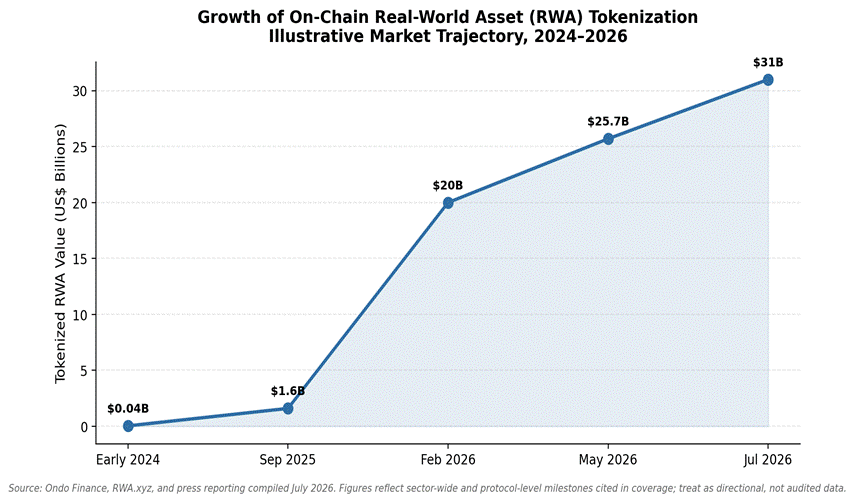
Figure 2: Illustrative growth trajectory of on-chain RWA tokenization, 2024–2026, based on protocol- and sector-level milestones reported by Ondo Finance, RWA.xyz, and industry press. Treat as directional rather than audited data.
The catch, and it’s an important one: institutional interest in the RWA narrative has not translated cleanly into price performance for the ONDO token itself. Coverage from mid-2026 describes market sentiment around ONDO as genuinely mixed — traders acknowledge the protocol’s leadership position and blue-chip partnerships, but the token does not currently capture direct cash flow from the protocol’s revenue, which leaves open a real question about how (or whether) that institutional adoption shows up in the token’s value over time.
This is a useful case study in a distinction every crypto reader should get comfortable with: a sector can be growing in genuine, verifiable, institutionally-validated ways while the specific token associated with the sector’s leading protocol trades sideways or lower. “The technology is winning” and “the token is winning” are two different claims, and conflating them is one of the more common mistakes in crypto content.
REGULATORY UPDATE
4. Governments Are Choosing Regulation Over Prohibition
Perhaps the least flashy but most structurally important thread in the “cautiously bullish” case is regulatory. A meaningful number of governments that once treated crypto with outright suspicion, or banned it in practice if not in name, are now building formal licensing regimes instead. Pakistan and Tanzania sit at very different points on that path, but both illustrate the same underlying direction of travel.
Pakistan: From De Facto Ban to Statutory Law
Pakistan’s shift is the more dramatic of the two. The State Bank of Pakistan barred banks and payment providers from dealing in virtual currencies back in 2018, and by 2022 a high court committee and the Federal Investigation Agency were pushing for an outright prohibition on AML and terrorism-financing grounds. That posture has now reversed almost completely. In March 2026, Pakistan’s parliament passed the Virtual Assets Act 2026, converting a temporary 2025 ordinance into permanent statutory law and establishing the Pakistan Virtual Assets Regulatory Authority (PVARA) as an autonomous regulator with the power to license, supervise, suspend, and revoke approvals for exchanges, custodians, wallet operators, and token issuers.
The law is not a free pass: unlicensed operators face fines of up to PKR 50 million and prison terms of up to five years, and applicants must already be recognized by a major jurisdiction such as the U.S., EU, or Singapore before PVARA will consider them. Binance and HTX had already received No Objection Certificates ahead of full licensing. Alongside the legal framework, Pakistan has also floated plans for a strategic Bitcoin reserve and allocated surplus electricity toward Bitcoin mining and AI data centers — signaling that this is being treated as industrial policy, not just consumer protection.
Tanzania: Earlier in the Process, But Moving the Same Direction
Tanzania’s position is less advanced but points the same way. The Bank of Tanzania has, since 2019, repeatedly warned the public that the Tanzanian shilling is the only legal tender and cautioned against trading virtual currencies. As of mid-2026, there is still no dedicated cryptocurrency law on the books. But the direction of travel has shifted: a National Cryptocurrency Technical Committee has run pilot assessments of crypto activity in Dar es Salaam and Zanzibar, the central bank is researching a central bank digital currency, and a December 2024 High Court ruling in a commercial dispute effectively acknowledged that crypto trading is not illegal in Tanzania, since parties engaged in it have been paying tax on the proceeds under existing law. A 2024 Finance Act amendment already introduced a 3% withholding tax on payments made by digital asset exchange platforms to Tanzanian residents — an early, practical sign that the government sees this as an activity to formalize and tax rather than eliminate.
| Jurisdiction | 2020 Stance | 2026 Stance | Key Development |
| Pakistan | Informal ban; SBP barred banks from crypto dealings | Full statutory licensing regime | Virtual Assets Act 2026; PVARA established as permanent regulator |
| Tanzania | Public warnings; no legal recognition | Nascent, tax-aware, exploratory | 3% withholding tax on VASP payments; High Court affirms crypto trading is not illegal |
| Kenya | Unregulated, high informal adoption | Formal legislation signed into law | Oversight placed under Central Bank of Kenya and Capital Markets Authority (Oct. 2025) |
| South Africa | Unregulated | Comprehensive financial-product framework | CASP licensing under FSCA; FATF Travel Rule adopted |
Table 1: Selected government approaches to crypto regulation, illustrating the shift from prohibition toward licensing across several emerging markets.
The pattern across these examples is consistent: outright bans have proven difficult to enforce against determined, tech-literate populations, so governments are pivoting toward licensing, taxation, and AML/CFT compliance instead — a framework that lets the state capture tax revenue and reduce illicit-finance risk without fighting a losing battle against adoption. For long-term market participants, regulatory clarity of this kind tends to matter more than any single price move, because it determines whether banks, payment processors, and larger pools of institutional capital are legally able to participate at all.
ANALYSIS
Reading This Fairly: The Case For Caution
A responsible take on “cautiously bullish” has to sit with the bear case as seriously as the bull case. Here is a balanced view of both sides.
| Factor | Bull Case | Bear Case / Risk |
| Fed policy | Weak jobs data reduces hike risk, supporting risk assets | A hot inflation print could reverse rate expectations quickly |
| ETF flows | Eight-week outflow streak has ended | Weekly inflow of ~$197M is modest against billions in 2026 YTD outflows |
| RWA sector | Institutional TVL and partnerships (BlackRock, Goldman, Fidelity) growing fast | ONDO token lacks direct value accrual from protocol revenue |
| Regulation | Pakistan, Kenya, and others moving from bans to licensing | Licensing regimes bring compliance costs and can still restrict smaller players |
| Sentiment | Narrative has shifted away from panic | Fear & Greed Index was still around 28 (“Fear”) in mid-July |
| Geopolitics | Markets have shown resilience to shocks compared to past cycles | Bitcoin trades 24/7 and reacts immediately to events like the Iran–U.S. tensions, adding volatility |
Table 2: A balanced framing of the factors behind the current “cautiously bullish” narrative.
The honest summary is this: several independent tailwinds are blowing in the same direction at once, which is genuinely more constructive than the picture in late June. But every one of those tailwinds is provisional — tied to a jobs report that could be revised, a flow trend that is one bad week from reversing, a token that hasn’t solved its value-accrual problem, and regulatory frameworks that are new enough to still carry implementation risk. “Cautiously bullish” is a real signal, not a guarantee, and it should be read as such.
EDUCATIONAL — HOW-TO
Practical Takeaway: How to Approach a Sentiment Shift Like This Safely
Whatever you decide to do with this information, a few practical habits matter more than trying to time the exact bottom or top.
- Separate news from your position sizing. A change in sentiment is information, not a signal to act immediately — give yourself a rule (e.g., a cooling-off period) before making any trade based on a headline.
- Use self-custody wisely for anything you’re not actively trading. A hardware wallet keeps your private keys offline; for smaller, active amounts, a reputable software wallet with two-factor authentication is a reasonable middle ground.
- Never share your seed phrase — not with an exchange “support agent,” not in a Telegram DM, not anywhere. Legitimate services will never ask for it.
- Verify ETF and token flow data from primary sources (SoSoValue, Farside Investors, issuer disclosures) rather than screenshots circulating on social media, which are easy to alter or take out of context.
- Check licensing status before using an exchange in a newly regulated market like Pakistan — a No Objection Certificate is a step toward a license, not a full operating license.
- Treat token-specific narratives (like RWA/ONDO) and sector-wide narratives (like RWA tokenization broadly) as separate questions with separate risk profiles.
COMMUNITY
Community Pulse: What Crypto Commentary Is Saying
Sentiment on crypto-focused corners of X and other platforms broadly mirrors the cautious optimism described above, with a few recurring themes worth summarizing rather than quoting directly, since individual posts are impossible to verify at the moment of publication and shouldn’t be presented as confirmed fact.
- Traders discussing ONDO specifically tend to frame the token’s story as one of strong fundamentals paired with weak price discovery — accumulation on dips from believers in the RWA thesis, paired with skepticism from chartists focused on resistance levels in the $0.34–$0.38 range.
- Commentary around the Bitcoin ETF reversal is largely measured rather than triumphant, with recurring emphasis on the fact that one strong week does not offset a year of net outflows.
- Posts from accounts following Pakistan’s regulatory rollout have highlighted the scale of the shift — from a country once grouped with China as an outright crypto-hostile jurisdiction to one building mining infrastructure and a proposed strategic reserve — as a bellwether for how emerging markets with high grassroots adoption may eventually formalize crypto activity.
As with any social-media sentiment, treat this as a temperature check rather than a data source. For anything you plan to act on, verify against the primary reporting and data cited throughout this piece.
Read more about Previous Updates
Why Bitcoin Is Struggling Below $64K
Glossary
Quick definitions for terms used throughout this piece:
| Spot ETF | An exchange-traded fund that holds the actual underlying asset (e.g., real Bitcoin) rather than futures contracts, letting investors gain exposure through a normal brokerage account. |
| Net inflow / outflow | The difference between new money entering a fund and money being withdrawn from it over a given period; a simple gauge of aggregate investor demand. |
| RWA (Real-World Asset) | A blockchain token that represents ownership of, or a claim on, an off-chain asset such as a U.S. Treasury bill, a money market fund, or company shares. |
| TVL (Total Value Locked) | The total dollar value of assets deposited into a given protocol or product; a common (if imperfect) measure of a DeFi platform’s scale. |
| APY (Annual Percentage Yield) | The real rate of return earned on a deposit or staked asset over one year, including the effect of compounding. |
| Gas fees | The transaction fee paid to a blockchain network’s validators or miners to process and confirm a transaction. |
| Staking | Locking up crypto to help secure or operate a blockchain network (or a DeFi protocol) in exchange for rewards, typically paid in the same or a related token. |
| Fear & Greed Index | A composite sentiment gauge, scored 0–100, that aggregates volatility, momentum, social media activity, and other inputs into a single “Fear” to “Greed” reading for the crypto market. |
| YMYL (“Your Money or Your Life”) | A Google content-quality classification applied to topics — including finance and crypto — that can significantly affect a reader’s financial well-being, health, or safety, and which is held to a higher editorial bar. |
| VASP | Virtual Asset Service Provider — the regulatory term for exchanges, custodians, wallet providers, and similar businesses that handle crypto on behalf of customers. |
| Disclaimer This article is provided for general educational and informational purposes only. It is not, and should not be construed as, investment, financial, tax, or legal advice, nor as a recommendation to buy, sell, or hold any cryptocurrency or other asset. Cryptocurrency markets are highly volatile, and past performance or current sentiment trends are not reliable indicators of future results. Prices, flow figures, and regulatory statuses referenced above reflect publicly reported data as of mid-July 2026 and may have changed by the time you read this. Always do your own research and consult a licensed financial advisor before making investment decisions. |
Selected Sources
SoSoValue and Farside Investors (Bitcoin spot ETF flow data); CoinDesk, TechTimes, and KuCoin market coverage (ETF and price reporting, July 2026); Ondo Finance, RWA.xyz, Coincub, and Yellow.com (RWA/ONDO data); CCN, MEXC News, The Block, Bitget, ProPakistani, and the official PVARA website (Pakistan Virtual Assets Act 2026); Freeman Law, TanzaniaInvest, Afriwise, PwC Tanzania, and Ripple’s 2026 Africa regulation overview (Tanzania and regional context).
 By
By

 By
By